
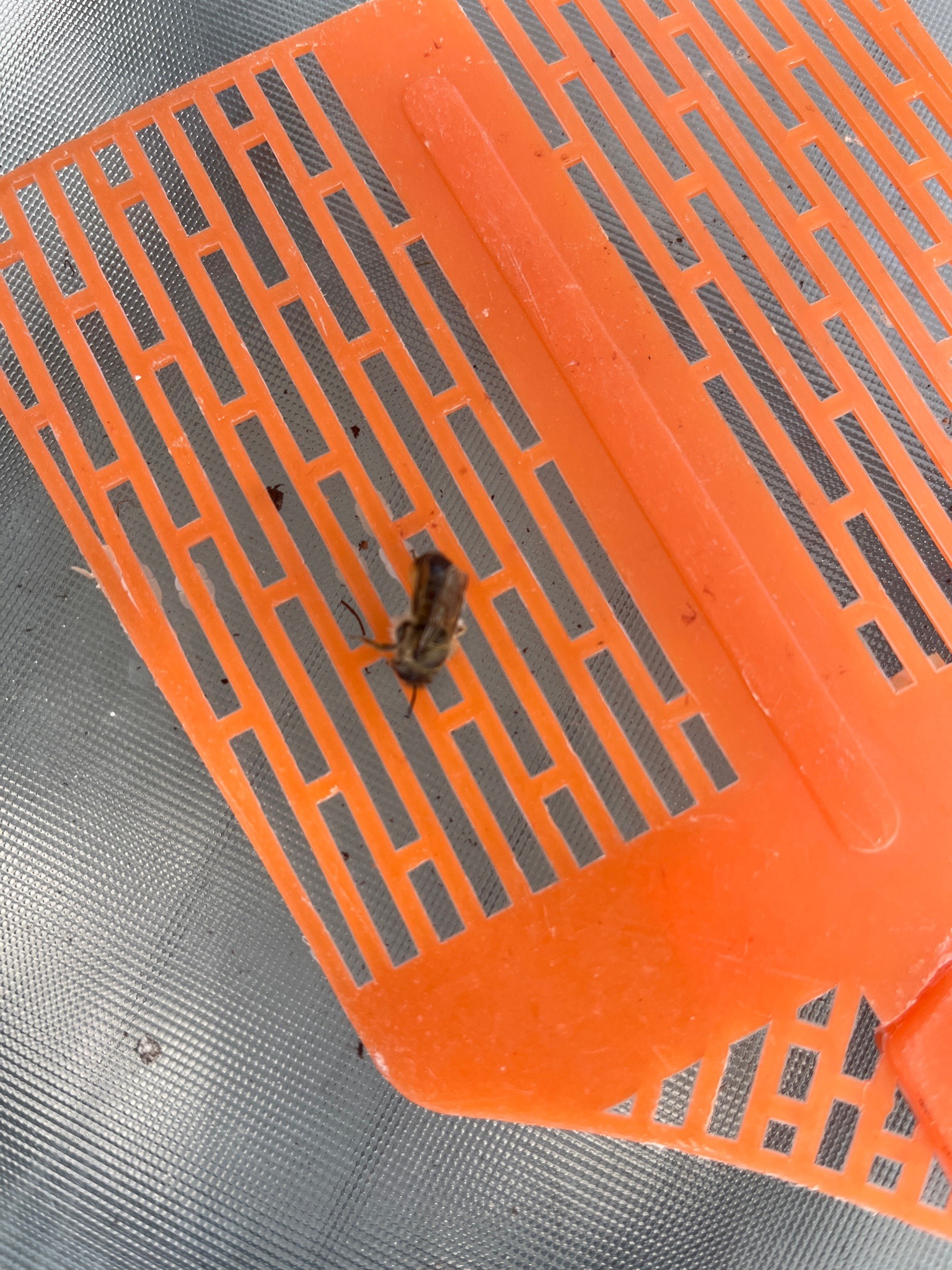
Community identification
Western Honey Bee
Apis mellifera
- Order & Family
- Hymenoptera, Apidae
- Size
- 10 mm to 20 mm in length
Natural Habitat
Gardens, meadows, woodlands, and orchards where flowering plants are present; they reside in managed hives or wild cavities such as hollow trees.
Diet & Feeding
Nectar and pollen collected from a wide variety of flowering plants.
Behavior Patterns
Highly social insects living in complex colonies. They exhibit a division of labor with a queen, drones, and worker bees who forage, build wax combs, and protect the hive. Known for their 'waggle dance' communication.
Risks & Benefits
Essential pollinators for ecosystem health and commercial agriculture. They produce honey and wax. Although generally non-aggressive, they can sting if they feel the hive or themselves are threatened; stings can cause serious allergic reactions in some individuals.