
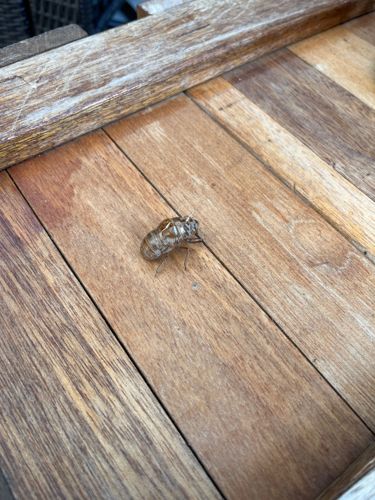
Cicada nymph exoskeleton (exuviae)
Various species within the family Cicadidae
- Order & Family
- Order: Hemiptera; Family: Cicadidae
- Size
- The exuviae (shed skin) typically ranges from 2.5 to 5 centimeters (1 to 2 inches) in length, reflecting the size of the mature nymph.
Natural Habitat
Nymphs live underground in soil, typically near trees and shrubs, including forests, woodlands, orchards, and suburban gardens. Adults emerge in wooded areas and can be found on trees and other vegetation.
Diet & Feeding
As nymphs, they feed on xylem fluid from the roots of trees and woody plants. Adult cicadas also feed on xylem fluid from twigs and branches, though their primary purpose is reproduction.
Behavior Patterns
Cicada nymphs live underground, sometimes for many years (1-17 years depending on the species), feeding on tree roots. When mature, they dig their way out, typically at dusk, and climb up a vertical surface (like a tree trunk, fence, or even a house wall). They then shed their nymphal exoskeleton (molt) to emerge as winged adults. The empty, brittle shells, called exuviae, are often found clinging to these surfaces. Adult cicadas are known for their loud buzzing or clicking calls made by males to attract mates.
Risks & Benefits
Cicadas are generally harmless to humans. They don't bite or sting. Large numbers of cicadas emerging can cause some minor damage to young trees due to egg-laying in twigs, but established trees usually recover. Ecologically, they are important as a food source for birds and other wildlife. Their burrowing as nymphs can help aerate the soil. The image shows the shed skin (exuviae) of a cicada nymph, which poses no risk.