
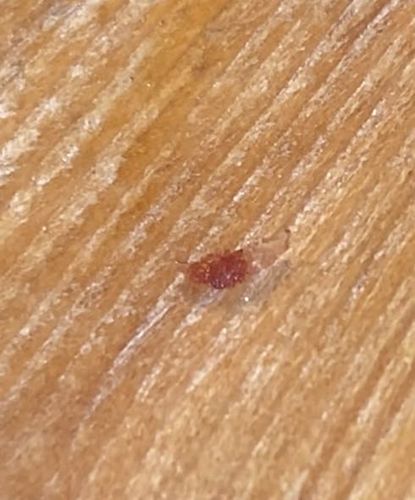
Community identification
Bed Bug Nymph
Cimex lectularius
- Order & Family
- Hemiptera / Cimicidae
- Size
- 1.5 mm to 4.5 mm (depending on life stage; nymphs start out translucent and very small).
Natural Habitat
Found primarily in human dwellings, typically hiding in mattress seams, bed frames, cracks, crevices, and behind wallpaper in close proximity to sleeping areas.
Diet & Feeding
Obligate hematophages; they feed exclusively on the blood of warm-blooded animals, with a strong preference for humans.
Behavior Patterns
Nymphs must feed once before molting into the next stage. They are nocturnal, photophobic, and attracted to carbon dioxide and body heat radiated by hosts during sleep.
Risks & Benefits
Risks include itchy allergic reactions, skin rashes, psychological distress, and secondary infections from scratching. They are not known to transmit diseases to humans. There are no known benefits to the ecosystem.