
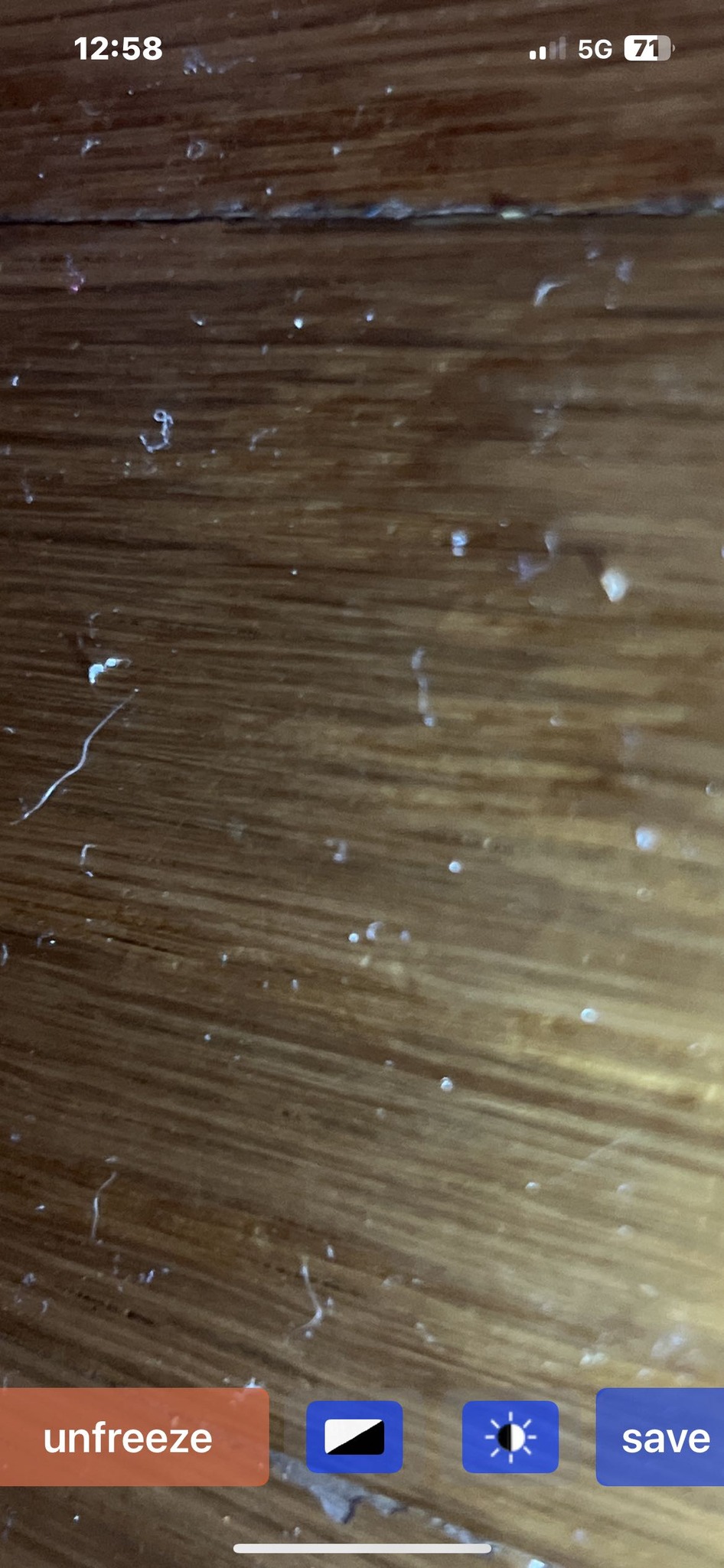
Community identification
Mold Mite (also known as Grain Mite/Dust Mite)
Tyrophagus putrescentiae
- Order & Family
- Order: Sarcoptiformes; Family: Acarididae
- Size
- 0.3 - 0.5 mm (microscopic to the naked eye, appearing as white dust specks)
Natural Habitat
High-humidity environments (above 60% relative humidity), kitchens, pantries, wooden floors, and areas with mold or fungal growth.
Diet & Feeding
Primarily feeds on mold, fungi, and yeasts; also scavenges on high-protein or fatty foods like grains, cheese, and dried meats.
Behavior Patterns
They reproduce rapidly in moist conditions. They are often seen as a 'moving dust' layer on surfaces. They do not bite but indicates a moisture or mold problem in the home.
Risks & Benefits
Risks: Can cause allergic reactions (dermatitis or respiratory issues) in sensitive individuals and contaminate food stores. Benefits: They do not damage structures but serve as biological indicators of excess moisture/mold.