
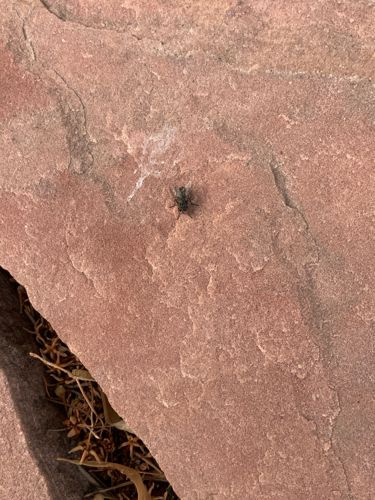
Fly
Too difficult to identify to genus/species level from image; general identification as Diptera.
- Order & Family
- Order: Diptera (True Flies)
- Size
- Typically 2 to 15 mm, though some species can be smaller or larger.
Natural Habitat
Flies are found in nearly every terrestrial habitat worldwide, from urban environments to forests, deserts, and wetlands. Their specific habitat depends on the species and its dietary needs.
Diet & Feeding
The diet of flies varies greatly depending on the species. Many feed on decaying organic matter, nectar, fruits, or the bodily fluids of other animals. Some are predatory or parasitic.
Behavior Patterns
Flies are typically active during the day. Many species are attracted to decaying organic matter for feeding and reproduction. They are known for their rapid flight and ability to quickly detect food sources.
Risks & Benefits
Risks: Many fly species can transmit diseases (e.g., house flies can transmit bacteria, mosquitoes transmit malaria). Some flies bite and can cause irritation or allergic reactions. Benefits: Many flies, especially hoverflies, are important pollinators. Larvae of some species play a role in decomposition and nutrient cycling. Some predatory flies help control pest insect populations.