
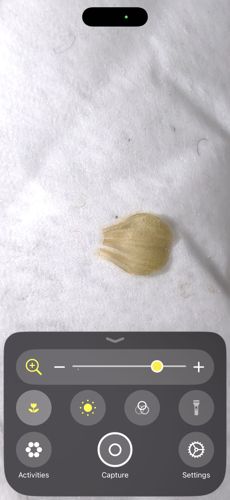
Community identification
Dog Flea Stage (Larval/Pupal) or Plant Matter
Ctenocephalides canis (suspected)
- Order & Family
- Order: Siphonaptera, Family: Pulicidae
- Size
- 1 - 5 mm (depending on life stage)
Natural Habitat
Found in bedding, carpets, and floor cracks where pets rest; generally indoors or in shaded outdoor areas.
Diet & Feeding
Larvae eat organic debris, particularly adult flea excrement ('flea dirt'); adults feed on host blood.
Behavior Patterns
Larvae seek dark, humid areas away from light; they spin a silk cocoon to pupate and can remain dormant for weeks or months.
Risks & Benefits
Risks include skin irritation, allergic reactions (flea allergy dermatitis), and potential transmission of tapeworms or pathogens. There are no known benefits to the ecosystem.