
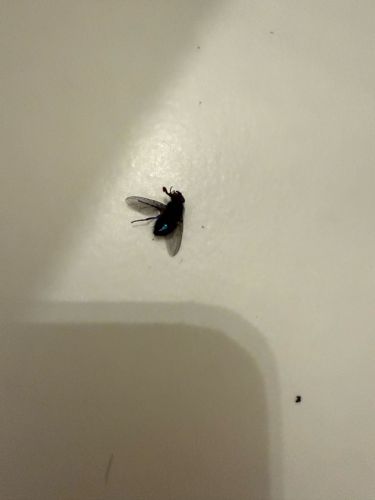
Community identification
Common Bluebottle Fly
Calliphora vicina
- Order & Family
- Diptera (Order), Calliphoridae (Family)
- Size
- 10-14 millimeters in length
Natural Habitat
Widely distributed in urban and rural environments, often found near decaying organic matter, trash, and homes.
Diet & Feeding
Adults feed on nectar and liquid organic fluids. Larvae (maggots) are scavengers that feed on carrion, rotting meat, and decaying organic waste.
Behavior Patterns
Active throughout the year except in very cold winters. They are often the first insects to arrive at a carcass to lay eggs. They exhibit a loud buzzing flight and are attracted to light.
Risks & Benefits
Risks: Can transmit pathogens like Salmonella or E. coli if they land on human food after being on waste. Benefits: Highly important decomposers in the environment and crucial in forensic entomology for determining time of death.