
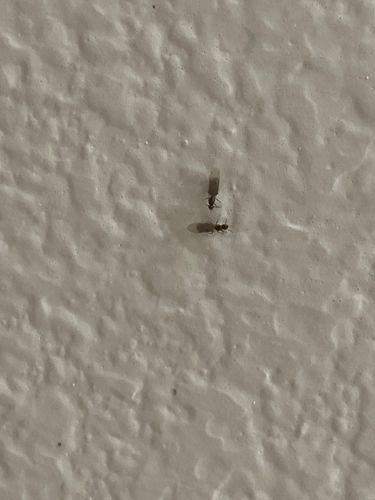
Flying Ant (or Swarming Ant)
Various species within Formicidae (e.g., Lasius niger, Camponotus spp., Tetramorium caespitum, depending on region)
- Order & Family
- Order: Hymenoptera, Family: Formicidae
- Size
- Typically 3mm to 15mm, depending on the ant species. Queens are usually larger than males and workers.
Natural Habitat
Flying ants are found globally in a wide range of terrestrial habitats from forests and grasslands to urban environments, wherever their parent colonies are established. They are often seen outdoors but can emerge indoors if a colony is within or very near a structure.
Diet & Feeding
Diet varies widely depending on the specific ant species. Most ants are omnivores, feeding on a variety of substances including sugars (from honeydew, nectar, fruits), proteins (from other insects, dead animals), fats, and seeds. The flying forms are primarily focused on reproduction, but will still consume available food sources if needed.
Behavior Patterns
Flying ants are typically reproductive ants (alates) from an established colony that emerge for mating flights. Males usually have a shorter lifespan after mating, while fertilized queens will seek a suitable location to start a new colony. They are often seen in large numbers during specific periods, especially after rain, when conditions are humid and warm, a phenomenon known as 'nuptial flight'.
Risks & Benefits
Risks: While generally harmless to humans, large swarms can be a nuisance. If they are carpenter ants, they can indicate a colony within wooden structures, potentially causing damage over time. Some species can bite or sting if provoked, though flying ants are usually not aggressive. Being in a structure may indicate a colony inside. Benefits: Ants play crucial ecological roles as decomposers, aerators of soil, seed dispersers, and as a food source for other animals. Their mating flights lead to the establishment of new colonies, contributing to healthy ant populations in ecosystems.