
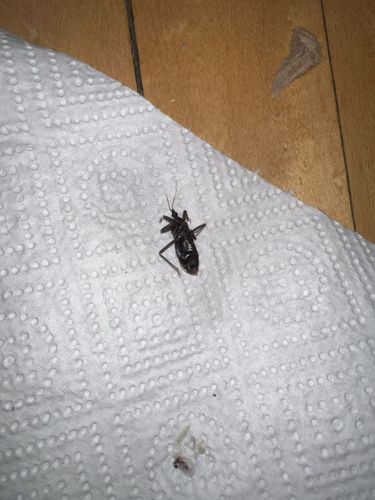
Kissing Bug, Assassin Bug, or Cone-nosed Bug
Triatominae (subfamily within Reduviidae)
- Order & Family
- Order: Hemiptera, Family: Reduviidae, Subfamily: Triatominae
- Size
- Adults typically range from 0.5 to 1.5 inches (1.25 to 3.8 cm) in length.
Natural Habitat
Kissing bugs are typically found in cracks and crevices of walls, under mattresses, in furniture, or in animal burrows and nests in outdoor environments. They are common in rural and often poorly constructed housing in endemic areas of Latin America.
Diet & Feeding
Most species of kissing bugs are hematophagous, meaning they feed on the blood of vertebrates, including humans, mammals, and birds. Some assassin bug species are predatory on other insects.
Behavior Patterns
Kissing bugs are primarily nocturnal, hiding during the day and emerging at night to feed. They are attracted to light, which explains why they might be found indoors. They are skilled at locating hosts by detecting carbon dioxide and body heat. Their bite is often painless, allowing them to feed without disturbing the host. They undergo incomplete metamorphosis, with nymphs resembling smaller versions of adults.
Risks & Benefits
Risks: The primary risk associated with kissing bugs is their potential to transmit Trypanosoma cruzi, the parasite responsible for Chagas disease. The parasite is not transmitted directly by the bite, but through the bug's feces, which are often deposited on the host's skin during or shortly after feeding. If the feces enter the bite wound or mucous membranes (e.g., eyes, mouth), infection can occur. Chagas disease can lead to severe cardiac and gastrointestinal complications if left untreated. Benefits: In nature, some assassin bug species are beneficial as predators of other insects, helping to control pest populations. However, the blood-feeding Triatominae subfamily generally poses more risks than benefits to humans.