
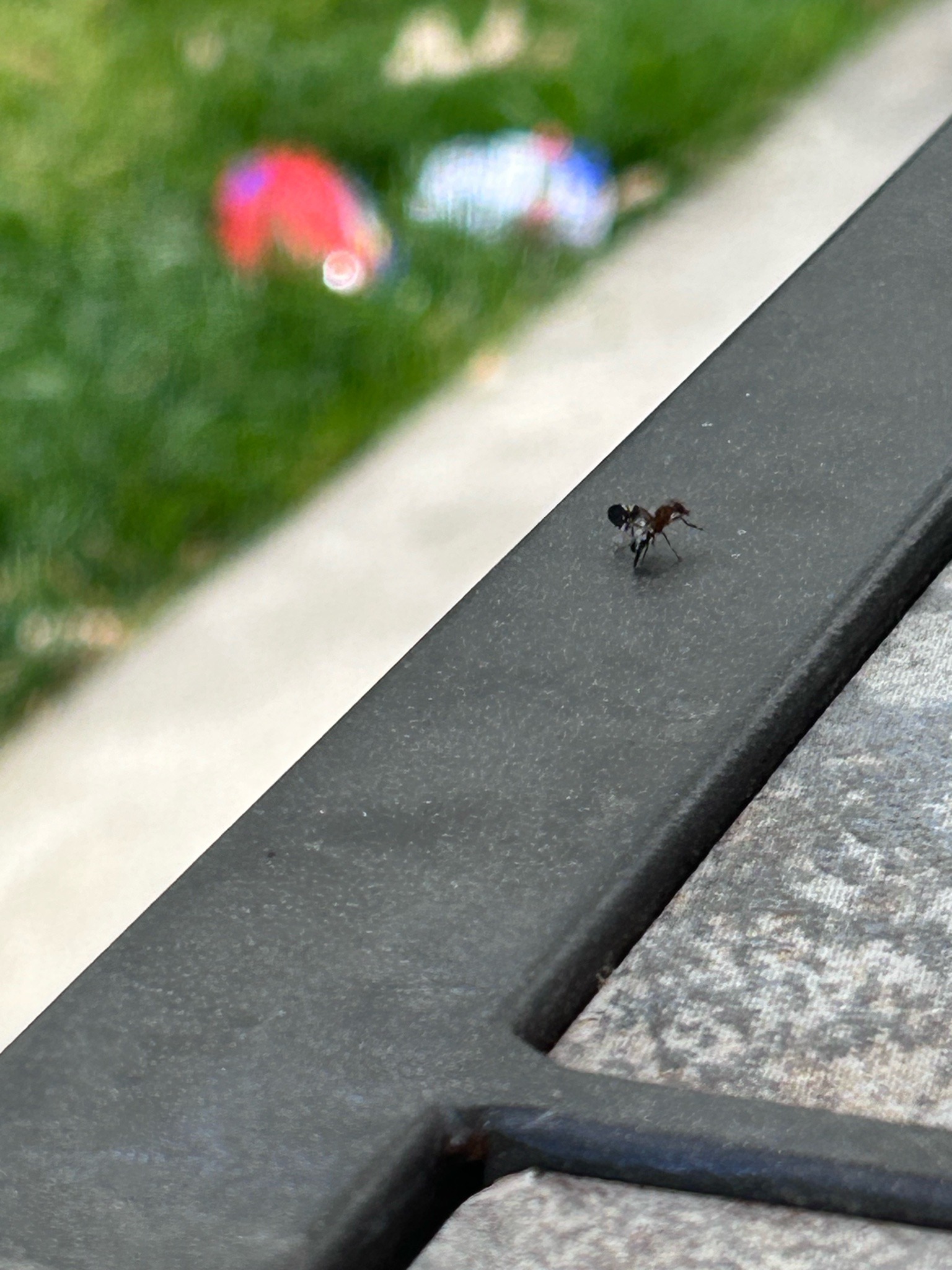
Carpenter Ant
Camponotus
- Order & Family
- Hymenoptera, Formicidae
- Size
- Typically ranges from 6 mm to 25 mm (0.24 to 1 inch) depending on the caste/species.
Natural Habitat
Found in both forested areas and around human structures. They build nests in moist or decaying wood, such as tree stumps, logs, and structural timbers.
Diet & Feeding
Opportunistic omnivores that eat protein (dead insects) and carbohydrates (honeydew from aphids, sweet liquids, and kitchen scraps). They do not eat wood but excavate it for nesting.
Behavior Patterns
Highly social insects with complex colonies. They are most active at night. Unlike termites, they do not consume wood; they chew galleries into wood to house their colony. They are known to travel up to several hundred feet from their nest to find food.
Risks & Benefits
Benefits: They act as decomposers in nature by breaking down dead wood and preying on other pest insects. Risks: They can cause structural damage to homes if a colony establishes itself in structural lumber or insulation. They do not sting but can deliver a painful bite with their mandibles and may spray formic acid into the bite wound.