
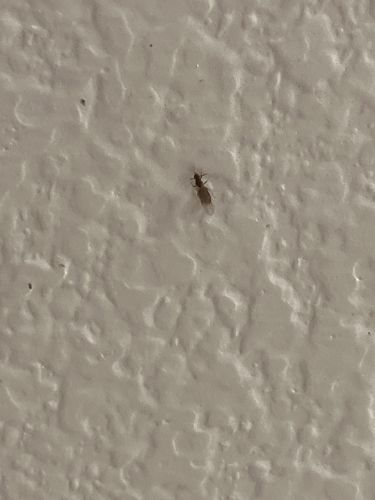
Booklouse
Various species, commonly Liposcelis spp.
- Order & Family
- Order: Psocoptera, Family: Liposcelididae (for common indoor species)
- Size
- Typically 1-2 mm (0.04-0.08 inches) in length
Natural Habitat
Indoors, they thrive in damp, humid environments like bathrooms, kitchens, basements, and around leaky pipes. They are often found in books (especially older ones), stored foods, and wallpaper. Outdoors, they can be found under bark, in bird nests, and among leaf litter.
Diet & Feeding
Booklice feed on mold, fungi, dead insects, pollen, cereals, glues in book bindings, wallpaper paste, and other starchy materials.
Behavior Patterns
Booklice are typically found in damp, dark, and undisturbed areas. They are mostly scavengers and are not known to bite or transmit diseases. They prefer high humidity environments and will infest areas with mold growth. They are generally active at night.
Risks & Benefits
Risks: Considered a nuisance pest, especially in homes or businesses where documents, books, or food products are stored. While they don't cause structural damage, their presence can indicate a moisture problem, which can lead to mold growth and associated health issues. They can contaminate food products and cause damage to paper goods. They are not known to bite humans or pets. Benefits: In outdoor environments, they can contribute to decomposition by feeding on mold and detritus.