
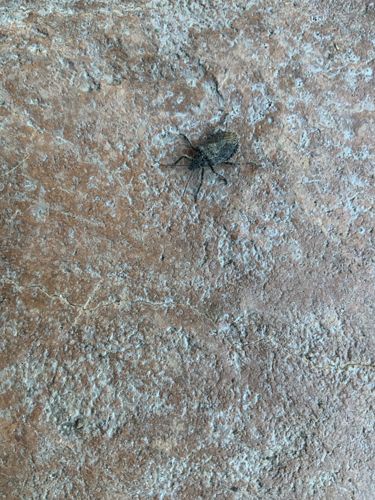
Stink Bug (specifically appears to be a Brown Marmorated Stink Bug due to markings and shape)
Halyomorpha halys (Brown Marmorated Stink Bug)
- Order & Family
- Order: Hemiptera, Family: Pentatomidae
- Size
- Approximately 12-17 mm (0.5-0.7 inches) in length
Natural Habitat
Originally from Asia, they are now widespread in North America and Europe. They are commonly found in agricultural fields, orchards, gardens, and wooded areas. In cooler months, they will try to enter homes and other structures for shelter.
Diet & Feeding
They are primarily herbivorous, feeding on a wide variety of plants, including fruits, vegetables, field crops, and ornamental plants. They use their piercing-sucking mouthparts to extract sap from plant tissues.
Behavior Patterns
Stink bugs are known for releasing a foul-smelling liquid from their scent glands when disturbed or threatened. They are typically active during the day. As temperatures drop in autumn, they seek shelter indoors for overwintering, often congregating in large numbers.
Risks & Benefits
Risks: Stink bugs, especially the Brown Marmorated Stink Bug (Halyomorpha halys), are significant agricultural pests, causing damage to a wide range of crops, leading to economic losses. When they invade homes, they do not bite or pose a health risk, but their sheer numbers can be a nuisance, and their defensive odor is unpleasant. Benefits: In their native range, they are part of the ecosystem and serve as a food source for some predators. However, in invaded regions, their negative impact as a pest far outweighs any minor ecological benefits.