
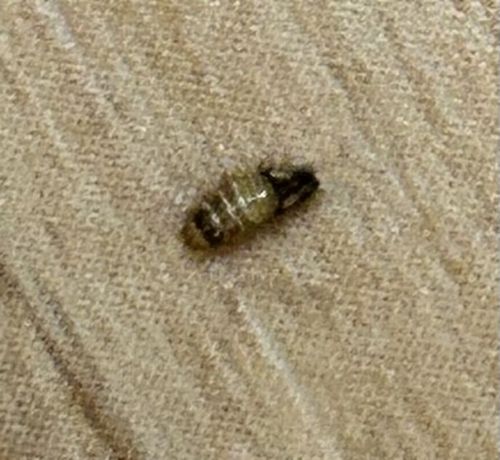
Carpet Beetle Larva (likely varied carpet beetle or black carpet beetle)
Likely Dermestes lardarius, Anthrenus verbasci, or Attagenus unicolor (species identification of larva alone is difficult without clearer distinguishing features)
- Order & Family
- Order: Coleoptera, Family: Dermestidae
- Size
- Larvae typically range from 2mm to 5mm in length, depending on the species and developmental stage.
Natural Habitat
Indoors: Carpets, rugs, upholstered furniture, closets, attics, museums, warehouses, and anywhere natural fibers, furs, or stored food products are present. Outdoors: Nests of birds and insects, animal carcasses, and in flowering plants (adults).
Diet & Feeding
The larvae of carpet beetles feed on a variety of animal-based products containing keratin, such as wool, silk, leather, fur, feathers, hair, pet food, dead insects, and dried animal remains. They can also feed on some plant-based materials like cotton, linen, and synthetic fibers if they contain food stains or residues.
Behavior Patterns
Carpet beetle larvae are typically found in dark, undisturbed areas where their food sources (keratin, natural fibers) are abundant. They are largely nocturnal or prefer dim lighting. When disturbed, they may curl up or attempt to hide. The larval stage can last from several months to a year, depending on environmental conditions and food availability. The adults are capable of flight and are often found outdoors feeding on pollen and nectar, but can fly indoors to lay eggs.
Risks & Benefits
Risks: Carpet beetle larvae are significant pests in homes, museums, and warehouses. They can cause considerable damage to clothing, carpets, furniture, and other items made of natural fibers, as well as museum specimens and stored food products. While they do not bite humans, some people may experience skin irritation or allergic reactions due to contact with their bristles or shed skins. Benefits: In nature, they play a role as scavengers, breaking down organic matter like animal carcasses and shed hair/feathers.