
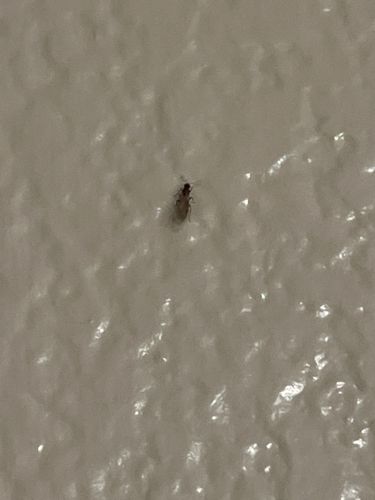
Booklouse / Booklice (plural)
Liposcelis spp. (a common genus of indoor booklice)
- Order & Family
- Order: Psocoptera; Family: Liposcelididae (common indoor species like Liposcelis corrodens or Liposcelis bostrychophila)
- Size
- Typically 1-2 mm in length.
Natural Habitat
Indoors, they prefer damp and humid environments. Common places include old books, paper, wallpaper, behind baseboards, in food storage areas (especially grains and cereals), and around leaky pipes or areas with condensation. Outdoors, they can be found in leaf litter, under bark, and in bird nests.
Diet & Feeding
They feed on microscopic molds, fungi, starches, glues in bookbindings, and other organic matter. They do not bite humans or pets.
Behavior Patterns
Booklice are typically found in damp, dark, and undisturbed areas. They are active in searching for food and are known to be quite agile for their size. They reproduce quickly in favorable conditions (high humidity, moderate temperatures, and abundant food sources). They undergo simple metamorphosis (egg, nymph, adult).
Risks & Benefits
Risks: Primarily a nuisance pest, especially in high numbers. They can damage books, paper products, and food items by their feeding activities. They do not transmit diseases. Benefits: In natural environments, they contribute to decomposition processes by feeding on fungi and detritus. In homes, their presence often indicates high humidity and potential mold growth, which can be an early warning sign for homeowners.