
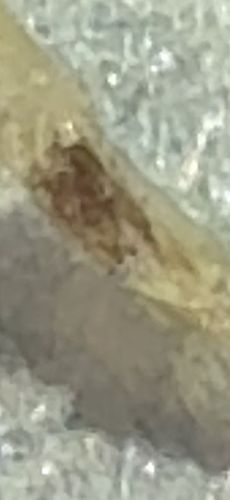
Case-bearing Clothes Moth (Larva/Case)
Tinea pellionella
- Order & Family
- Lepidoptera / Tineidae
- Size
- Larval case is typically 5-10 mm long.
Natural Habitat
Typically found indoors in dark, undisturbed areas such as closets, under furniture, or in carpet corners. They thrive in environments with natural fibers.
Diet & Feeding
The larvae feed on keratin-based animal fibers including wool, silk, fur, feathers, and felt. They will also eat accumulated hair and lint found in dust bunnies.
Behavior Patterns
The larva builds a portable, silken tube-like case around its body, often attaching debris (sand, fibers, or fecal, pellets) to the outside for camouflage. It carries this case with it as it moves to feed. When threatened, it retreats inside the case.
Risks & Benefits
They are considered a household pest because the larvae can damage clothing, carpets, upholstery, and other textiles made of natural animal fibers. They do not bite or sting humans and pose no direct health risk.