
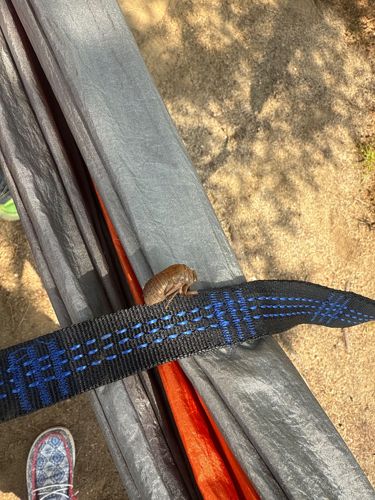
Cicada Nymph (Exiting Shell)
Various genera and species within Cicadidae (e.g., Magicicada for periodical cicadas, Neocicada for annual cicadas)
- Order & Family
- Order: Hemiptera, Family: Cicadidae
- Size
- Nymphs can range from 1 to 3 inches (2.5 to 7.5 cm) in length depending on the species and stage of development. Adults are typically 1 to 2 inches (2.5 to 5 cm) long, excluding wings.
Natural Habitat
Cicada nymphs live underground, often in deciduous or coniferous forests, orchards, and suburban areas where trees are present. They emerge from the soil to molt into adults.
Diet & Feeding
Cicada nymphs feed on the xylem fluid from the roots of trees and other woody vegetation. Adult cicadas also feed on xylem fluid from trees.
Behavior Patterns
Cicada nymphs live underground for most of their lives, feeding on tree roots. When ready to molt, they dig their way to the surface, typically at dusk, and climb onto a vertical surface (like a tree trunk or, in this case, a hammock strap) to undergo their final molt into an adult cicada. This usually happens overnight. The shed exoskeleton (exuvia) is often left behind.
Risks & Benefits
Risks: Cicadas are generally harmless to humans. They do not bite or sting. Large outbreaks can cause some damage to young trees or ornamental plants due to feeding and egg-laying, but mature plants usually recover. Benefits: Cicadas are a food source for many animals, including birds, small mammals, and other insects. Their burrowing activity can help aerate the soil, and when they emerge, their decaying bodies can contribute nutrients to the soil.