
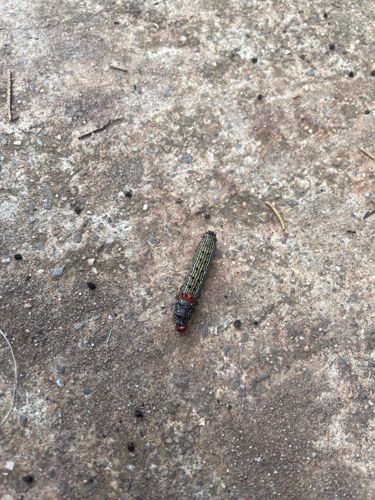
Cutworm (likely a species of Agrotis, Peridroma, or Feltia)
Agrotis ipsilon (Black Cutworm) is a common example, but identification to species without more detail is difficult as many Noctuidae caterpillars look similar.
- Order & Family
- Order: Lepidoptera, Family: Noctuidae
- Size
- Larvae typically range from 2.5 to 5 cm (1 to 2 inches) in length when fully grown.
Natural Habitat
They are typically found in agricultural fields, gardens, lawns, and areas with rich soil and abundant plant growth. They burrow into the soil during the day.
Diet & Feeding
Cutworms are polyphagous, meaning they feed on a wide variety of plants. They primarily consume the stems and leaves of young plants, including garden vegetables, field crops (e.g., corn, tomatoes, beans), and seedlings.
Behavior Patterns
Cutworms are nocturnal feeders, hiding in the soil or under debris during the day and emerging at night to feed. They often sever young plant stems at or just below the soil surface, hence their name 'cutworm'. They curl into a C-shape when disturbed.
Risks & Benefits
Risks: Cutworms are significant agricultural pests, causing considerable damage to young plants and crops, leading to economic losses. Benefits: As part of the ecosystem, they contribute to the food chain for birds, predatory insects, and other animals. However, their pest status usually outweighs any perceived benefits in cultivated areas.