
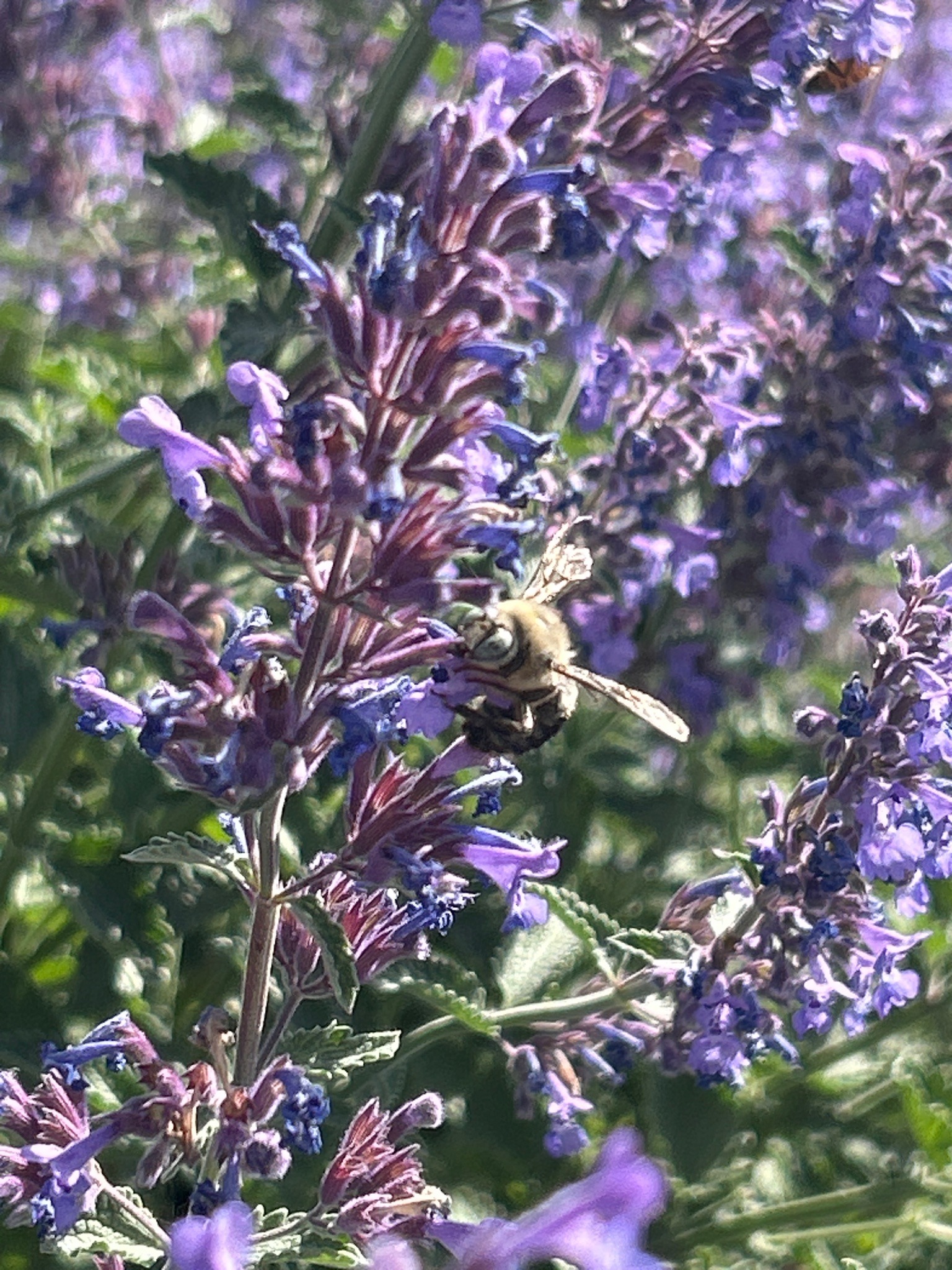
Community identification
Western Honey Bee
Apis mellifera
- Order & Family
- Hymenoptera: Apidae
- Size
- 10-15 mm (worker), 15-20 mm (queen), 15-17 mm (drone)
Natural Habitat
Meadows, open woodlands, gardens, and agricultural fields; primarily domesticated in hives but also found in hollow trees or rock crevices.
Diet & Feeding
Primarily nectar for energy and pollen for protein, collected from a wide variety of flowering plants.
Behavior Patterns
Eusocial insects living in complex colonies with a single queen, thousands of workers, and hundreds of drones. They communicate via waggle dances to alert colony members to food sources.
Risks & Benefits
Highly beneficial as major pollinators for wildflowers and commercial crops; they also produce honey and wax. The main risk is a defensive sting that can cause allergic reactions in sensitive individuals.