
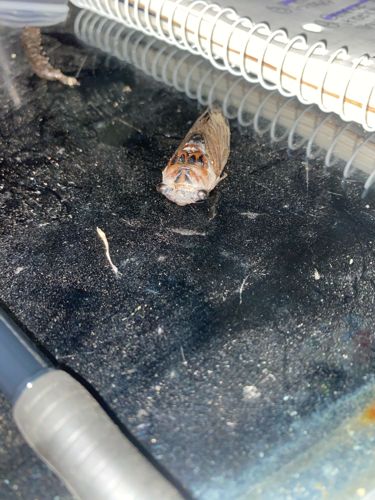
Cicada exuvia
Cicadidae (exuvia)
- Order & Family
- Hemiptera, Cicadidae
- Size
- Typically 1 to 2 inches (2.5 to 5 cm) in length, varying by species (this is the shed skin of a nymph).
Natural Habitat
Found on trees, shrubs, and other vertical surfaces where cicada nymphs emerge from underground to molt into adults. The nymphs live underground, feeding on tree roots.
Diet & Feeding
This is a discarded exoskeleton (exuvia) and does not feed. The nymph, from which this skin came, feeds on xylem fluid from plant roots.
Behavior Patterns
Cicada nymphs spend years underground. When they are ready to become adults, they emerge, climb onto a stable surface (like a tree trunk or leaf), and shed their exoskeleton in a process called molting. This shed skin is what is visible in the image.
Risks & Benefits
No risks or benefits from the exuvia itself. Adult cicadas are harmless to humans. Their emergence, especially periodical cicadas, can sometimes cause minor damage to young trees due to egg-laying in branches. However, they are an important food source for many animals and their tunneling can aerate the soil. Their loud singing can be considered a nuisance by some.