
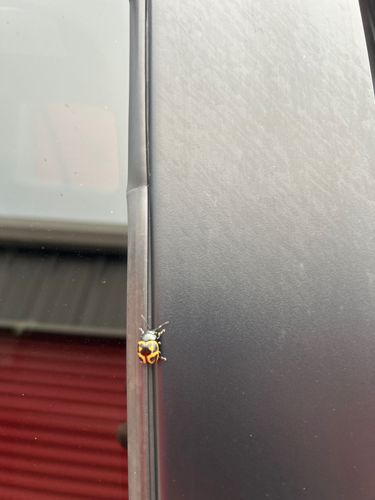
Tortoise Beetle (likely a species of Cassidinae subfamily)
Likely a species within the Chrysomelidae family, subfamily Cassidinae. Without clearer features or geographic location, it's difficult to pinpoint the exact genus or species (e.g., Charidotella, Deloyala, Chelymorpha). The markings suggest it could be a species like Plagiometriona clavata or a related 'cloverleaf' pattern tortoise beetle.
- Order & Family
- Order: Coleoptera, Family: Chrysomelidae, Subfamily: Cassidinae
- Size
- Typically small to medium-sized, ranging from about 4 mm to 12 mm in length, though some species can be larger.
Natural Habitat
Found on the foliage of their host plants, in gardens, agricultural fields, forests, and other areas where their preferred plant species grow. They are often well-camouflaged on leaves.
Diet & Feeding
Herbivorous, feeding primarily on the leaves of various plants. Specific host plants vary by species, but they are often associated with plants in families like Convolvulaceae (morning glories, sweet potatoes), Asteraceae, or Brassicaceae.
Behavior Patterns
Larvae and adults feed on plant leaves. They undergo complete metamorphosis with egg, larval, pupal, and adult stages. Many tortoise beetles are active during the day and are often found on their host plants. Some species exhibit parental care where the female guards the eggs or young larvae.
Risks & Benefits
Potential Risks: Some species can be considered agricultural pests if they feed on cultivated crops in large numbers. Potential Benefits: Generally, they are part of the natural food web. Many species are not pests and just contribute to biodiversity. In certain ecosystems, they can play a role in regulating plant growth by consuming leaves, though this is usually minor.