
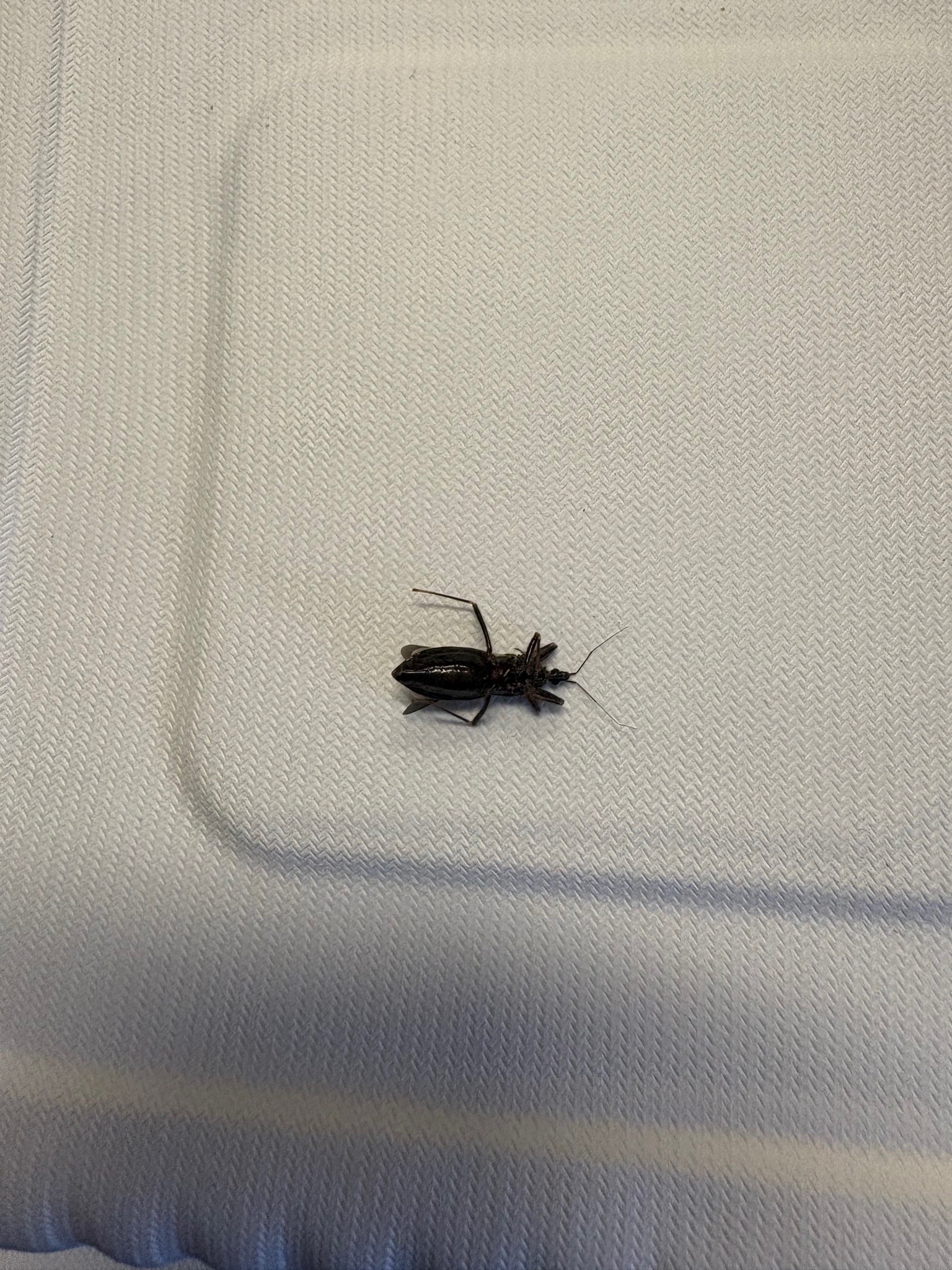
Masked Hunter
Reduvius personatus
- Order & Family
- Hemiptera: Reduviidae
- Size
- 17 to 22 mm (approx. 0.7 to 0.9 inches)
Natural Habitat
Often found indoors, particularly in areas with dust or lint where their larvae can camouflage themselves. They are common in houses, farms, and storage buildings.
Diet & Feeding
Carnivorous. They primarily eat other insects such as bed bugs, lacewings, earwigs, and flies. They use their piercing-sucking mouthparts to inject digestive enzymes into their prey.
Behavior Patterns
Nymphs are unique for camouflage, covering themselves with dust, sand, or lint. They are typically nocturnal and are attracted to lights. They use a rostrum to bite prey.
Risks & Benefits
Benefits: They act as natural pest control by eating common household pests like bed bugs. Risks: While they do not transmit diseases, they can deliver a very painful bite to humans if handled or provoked, which may cause localized swelling.