
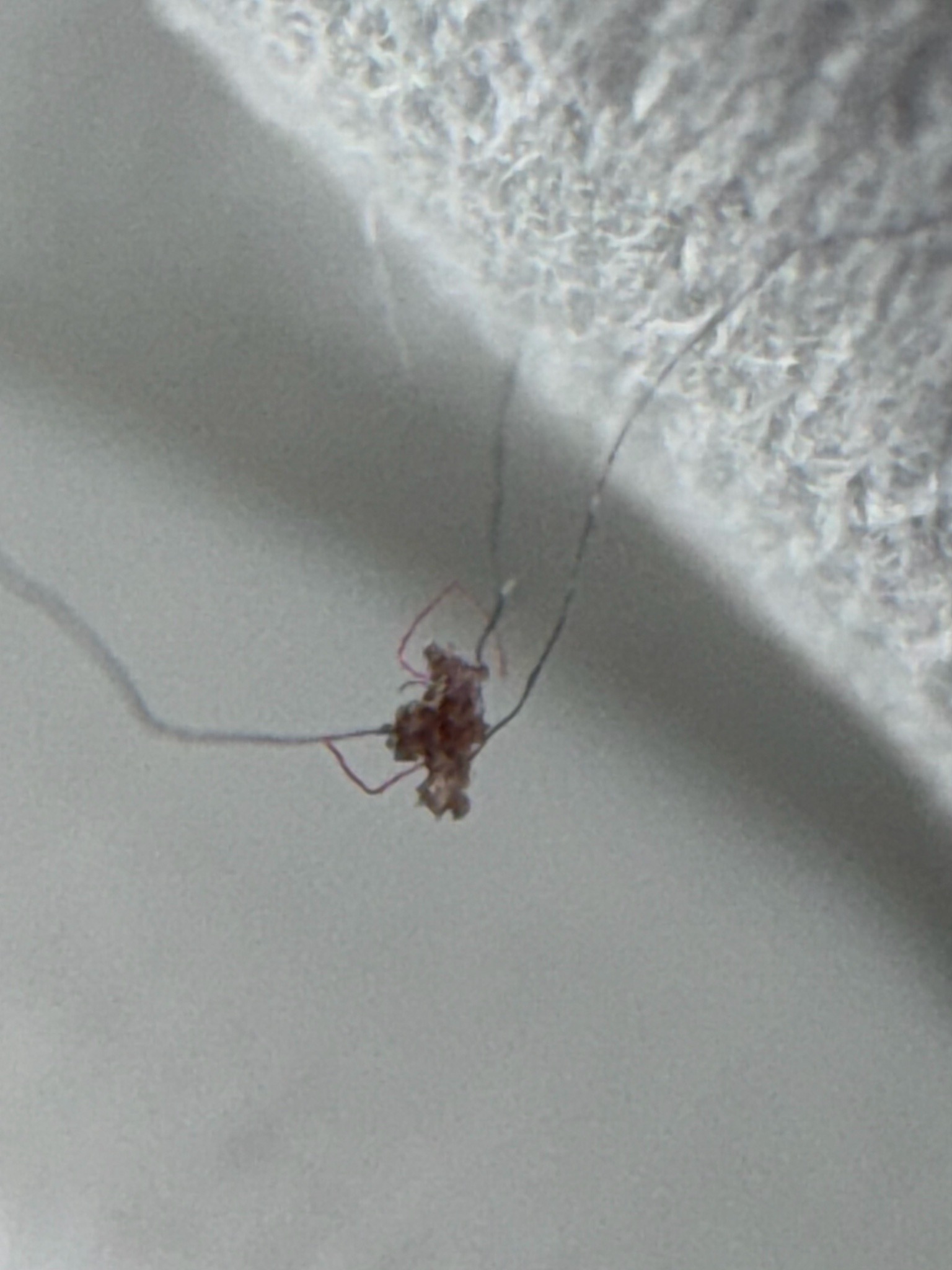
Cockroach nymph, probably a German cockroach
Blattella germanica (tentative identification)
- Order & Family
- Blattodea, Ectobiidae
- Size
- Approximately 3–15 mm as a nymph; adults are usually 13–16 mm long. The insect in the image appears to be a small nymph, although the photograph is too blurred for certain species-level identification.
Natural Habitat
Warm, humid indoor areas—especially kitchens, bathrooms, wall voids, plumbing spaces, and locations near food or water. The pictured insect is on a wall or other indoor surface.
Diet & Feeding
Omnivorous and opportunistic. It feeds on food crumbs, grease, starches, sweets, pet food, organic debris, and sometimes paper or adhesives.
Behavior Patterns
Mostly nocturnal and fast-moving; hides in cracks, crevices, cabinets, and wall spaces during the day. German cockroaches reproduce rapidly, with females carrying egg cases until shortly before hatching. Nymphs lack fully developed wings and molt several times before becoming adults.
Risks & Benefits
Indoors, cockroaches are pests that can mechanically spread bacteria and contaminate food and surfaces. Their shed skins and droppings may trigger allergies or asthma. They provide little household benefit, though cockroaches in natural environments contribute to decomposition and serve as prey for other animals. The image is not sharp enough to rule out a different small cockroach or another long-antennaed insect.