
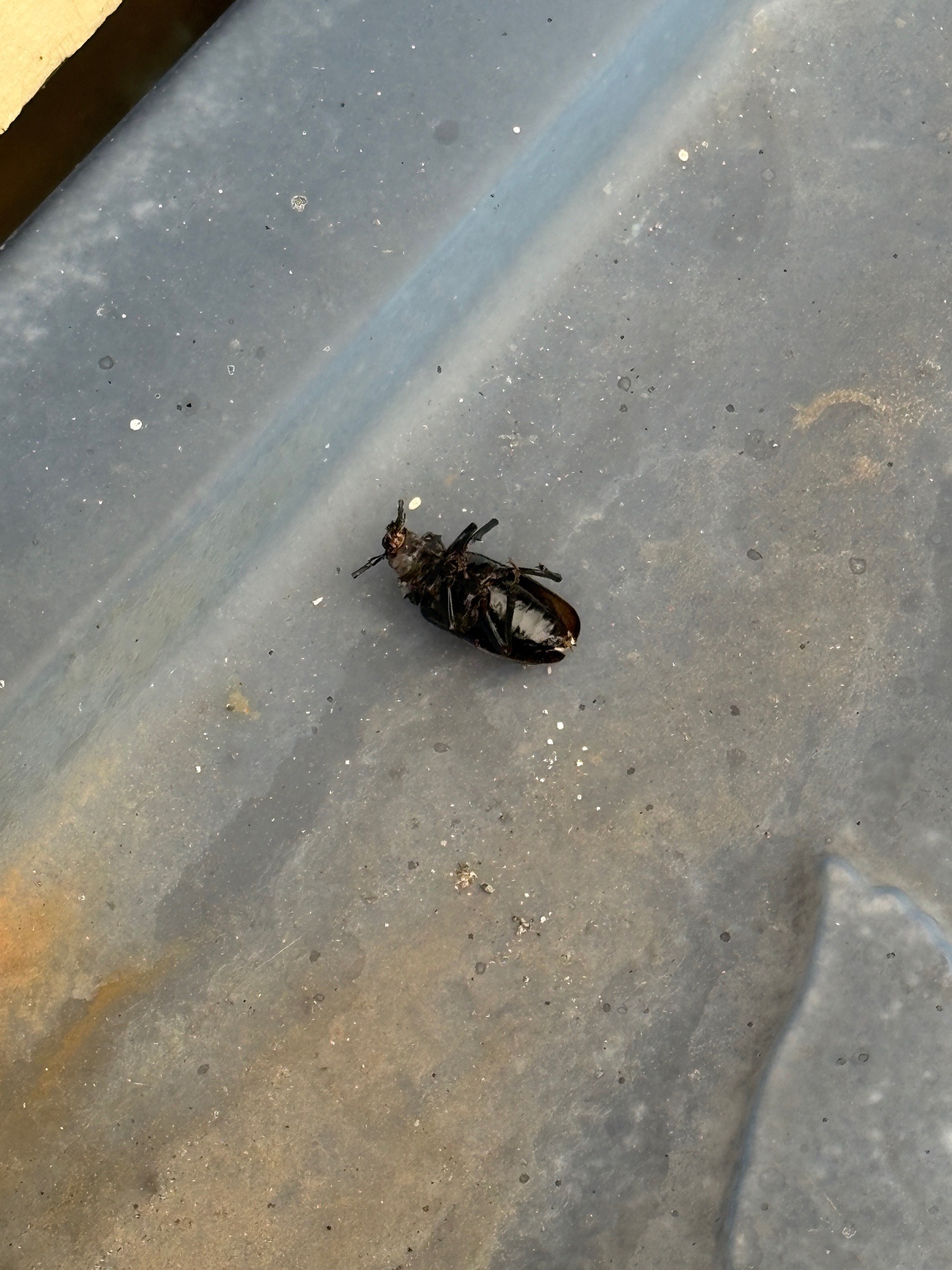
Community identification
Carrion Beetle (also known as a Sexton Beetle or Burying Beetle)
Nicrophorus spp. (likely Nicrophorus orbicollis or similar)
- Order & Family
- Order Coleoptera; Family Silphidae
- Size
- 10 mm to 35 mm (roughly 0.4 to 1.4 inches) depending on the species.
Natural Habitat
Found in forests, grasslands, and fields where animal carcasses are present; often hides under leaf litter or soil.
Diet & Feeding
Primarily carrion (dead animals) and fly larvae (maggots) that compete for the carcass.
Behavior Patterns
Known for burying small carcasses to use as a food source for their larvae. They exhibit rare parental care among insects, guarding and feeding their young. They are often nocturnal and attracted to lights.
Risks & Benefits
Benefits the ecosystem by acting as a scavenger, recycling nutrients back into the soil, and controlling fly populations. They pose no risk to humans, though they may emit a foul odor if handled.