
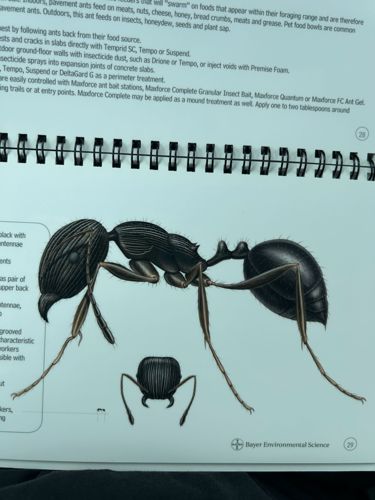
Pavement Ant
Tetramorium caespitum (based on common identification of small black ants often found on pavements)
- Order & Family
- Order: Hymenoptera, Family: Formicidae
- Size
- Typically small, workers range from 2.5 to 4 mm in length.
Natural Habitat
Indoors, they can be found in various locations, often around food sources. Outdoors, they are commonly found in pavements, cracks in slabs, and around the perimeter of buildings. Nests are often located under pavement, concrete slabs, and along foundations.
Diet & Feeding
Indoors, pavement ants feed on meats, nuts, cheese, honey, bread crumbs, and grease. Outdoors, they feed on insects, honeydew, seeds, and plant sap. Pet food bowls are common attractants.
Behavior Patterns
Pavement ants forage in trails, often appearing to 'swarm' on food sources. They can be found indoors and outdoors, seeking food and nesting sites. They are typically active day and night. Control methods emphasize tracing ants back to their food source and direct treatment of nests or foraging areas.
Risks & Benefits
Potential risks include being a nuisance pest, contaminating food sources, and their presence signaling unsanitary conditions. They can infest homes and businesses. As general scavengers, they can play a minor role in breaking down organic matter, but their pest status often outweighs any benefits in human-occupied environments.