
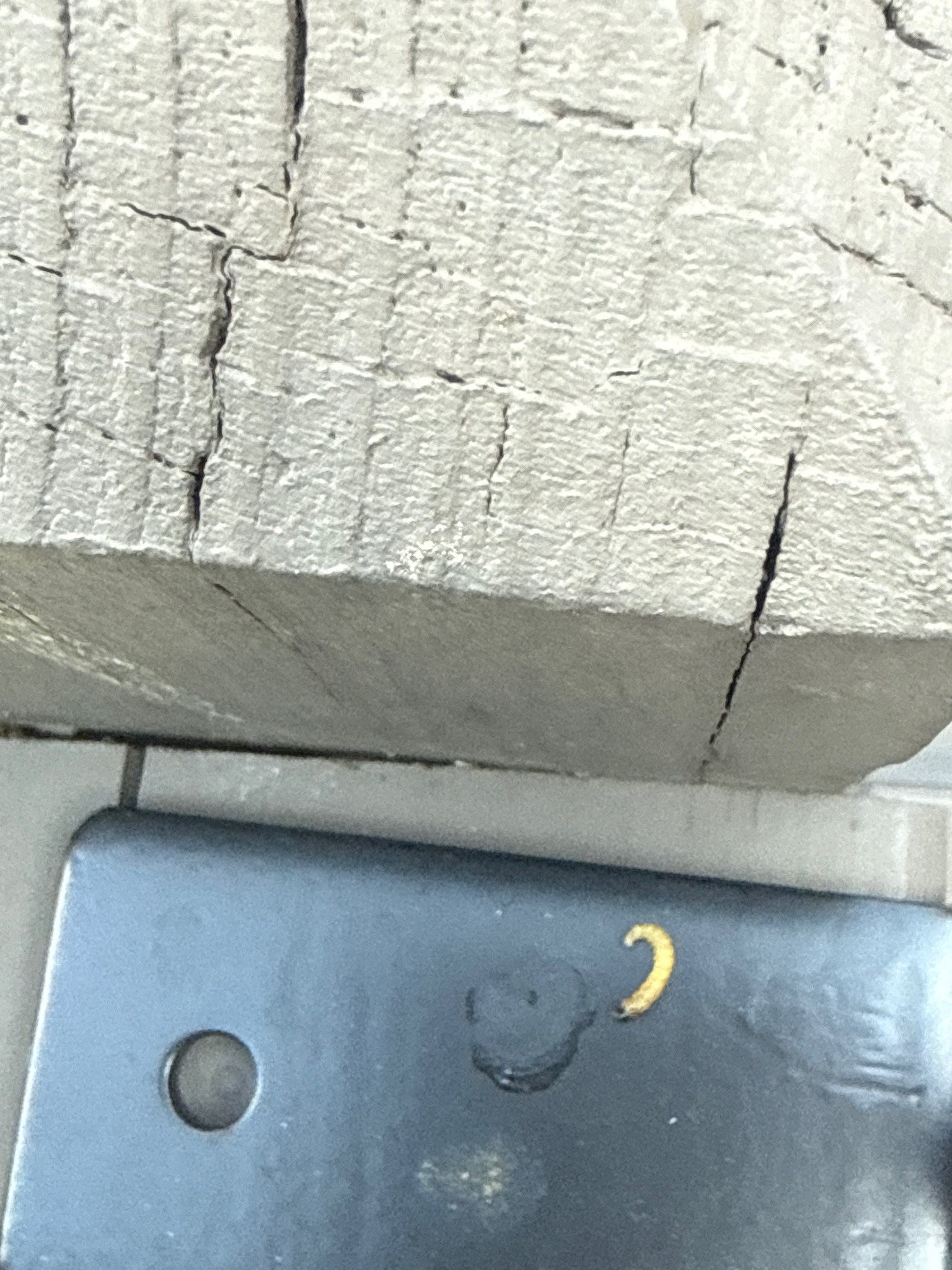
Community identification
Flatheaded Wood Borer (Buprestid Larva)
Chrysobothris spp. (likely)
- Order & Family
- Coleoptera, Buprestidae
- Size
- 10 to 50 mm in length depending on species and maturity.
Natural Habitat
Typically found inside the trunks, branches, or roots of weakened, dying, or recently felled trees and wooden structures.
Diet & Feeding
Herbivorous; larvae feed on the cambium and xylem (inner bark and wood) of host trees, creating winding galleries.
Behavior Patterns
The larvae are wood-borers that remain hidden inside wood for 1 to 3 years. They are known for their distinctively widened thoracic segment just behind the head, giving them a hammer-headed appearance.
Risks & Benefits
Risks: Can be significant pests to timber, orchards, and ornamental trees, potentially killing the host. Benefits: In natural forest ecosystems, they help break down dead wood, contributing to nutrient cycling.