
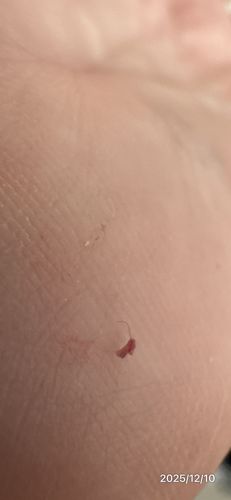
Ingrown Hair
Folliculitis barbae (not an insect)
- Order & Family
- Not applicable (dermatological condition)
- Size
- Typically 1-5 mm in diameter (size of an inflamed hair follicle)
Natural Habitat
Human skin, particularly areas with coarse hair such as the face, neck, and pubic region.
Diet & Feeding
Not applicable (not a living organism in the biological sense)
Behavior Patterns
Ingrown hairs occur when a hair curls back or grows sideways into the skin. This can happen after shaving, waxing, or plucking. The body's immune system recognizes the hair as a foreign intruder, leading to inflammation, redness, and sometimes pus formation. It's not a 'behavior pattern' of an organism, but rather a bodily reaction.
Risks & Benefits
Risks: Can cause discomfort, itching, pain, and lead to bacterial infection (secondary folliculitis) if scratched or irritated. In some cases, prolonged ingrown hairs can cause hyperpigmentation, scarring, or pseudofolliculitis barbae (razor bumps). Benefits: None, as it is a skin condition, not an advantageous organism.