
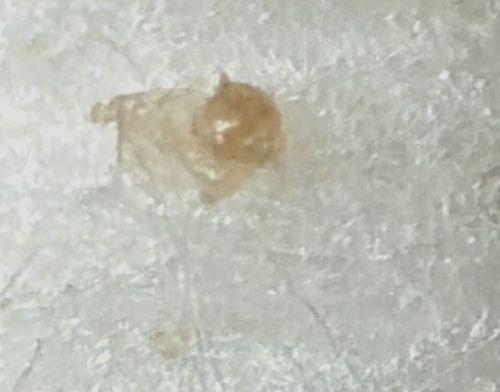
Bed Bug (Likely a cast skin or nymph)
Cimex lectularius
- Order & Family
- Order: Hemiptera, Family: Cimicidae
- Size
- Nymphs range from 1.5 mm to 4.5 mm; Adults are approx. 5-7 mm
Natural Habitat
Indoor environments close to human hosts; commonly found in mattress seams, box springs, bed frames, furniture crevices, behind baseboards, and under loose wallpaper.
Diet & Feeding
Obligate hematophages (feed exclusively on blood, primarily human blood, though they can feed on other warm-blooded animals)
Behavior Patterns
They are nocturnal pests that hide in cracks and crevices during the day. They emerge at night to feed. As they grow, nymphs molt five times, shedding amber-colored casings (exuviae) similar to the object in the image for each stage of development.
Risks & Benefits
Risks include itchy bites that can cause allergic reactions, secondary skin infections from scratching, and significant psychological distress (anxiety, insomnia). They are not known to spread disease. There are no ecological benefits within a human home environment.