
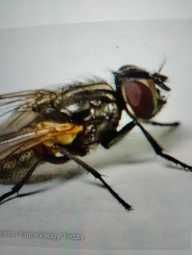
Community identification
House Fly
Musca domestica
- Order & Family
- Order: Diptera; Family: Muscidae
- Size
- 6–7 mm (0.24–0.28 in) in length
Natural Habitat
Found worldwide in close association with humans, livestock, and decaying organic matter.
Diet & Feeding
Polyphagous; they feed on human foodstuffs, animal feed, garbage, excrement, and variety of liquefiable organic substances.
Behavior Patterns
Active during daylight hours. They go through a complete metamorphosis (egg, larva/maggot, pupa, adult). Known for rapid flight and the ability to taste with their feet.
Risks & Benefits
Risks: Major vector for diseases such as typhoid, cholera, and salmonellosis as they transmit pathogens from waste to food. Benefits: Act as decomposers in the ecosystem and are a food source for birds, spiders, and other insects.