
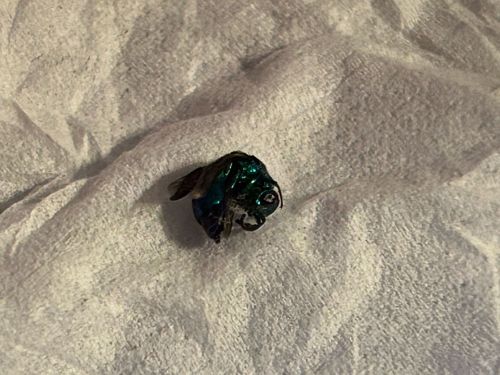
Carpenter Bee
Xylocopa (likely Xylocopa virginica based on appearance in North America)
- Order & Family
- Order: Hymenoptera, Family: Apidae
- Size
- Typically 0.5 to 1 inch (12.7 mm to 25.4 mm) in length.
Natural Habitat
Wooded areas, suburban gardens, and anywhere there is dead or decaying wood for nesting. They frequently nest in structural timbers of houses, decks, and outdoor furniture.
Diet & Feeding
Adult carpenter bees primarily feed on nectar and pollen from a wide variety of flowering plants. Larvae feed on a mixture of pollen and nectar provisioned by the female.
Behavior Patterns
Often seen foraging on flowers for nectar and pollen. They are generally solitary, with each female building her own nest, typically by excavating tunnels in wood. The males are known for territorial patrolling behavior.
Risks & Benefits
Risks: Can cause structural damage to wooden structures through their nesting tunnels. Benefits: Important pollinators, contributing to the reproduction of many plants, including some agricultural crops.