
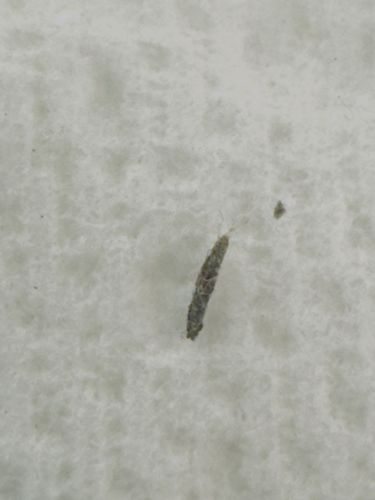
Household Casebearer, Plaster Bagworm
Phereoeca uterella
- Order & Family
- Lepidoptera, Tineidae
- Size
- Larval cases range from 5 mm to 15 mm (up to 1/2 inch) in length. The actual larva inside is smaller. Adult moths are typically 8-10 mm (around 1/3 inch) long.
Natural Habitat
Commonly found in homes and buildings, particularly in damp or humid areas, closets, under carpets, or dark corners. Their larval cases are often seen attached to walls or ceilings.
Diet & Feeding
Larvae are scavengers and feed on organic materials such as spiderwebs, wool, hair, lint, felt, dust, and sometimes synthetic fibers and dried animal specimens. They are known to feed on keratin-containing materials.
Behavior Patterns
The larva lives within a flattened, silk case covered with bits of detritus, which it carries around. It extends its head and thoracic legs from one end to move and feed, and can turn around within the case to feed from either end. Pupation occurs inside the case. Adults are small, dark moths that are not strong fliers and are typically nocturnal.
Risks & Benefits
Potential risks include damage to clothing (especially wool), carpets, upholstery, and other household items composed of natural fibers. They do not pose a direct health risk to humans. There are no significant known benefits.