
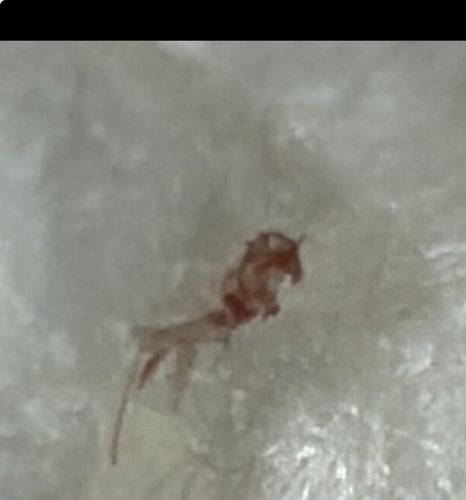
Community identification
Louse (specifically resembling a Body Louse or Head Louse)
Pediculus humanus
- Order & Family
- Order: Phthiraptera, Family: Pediculidae
- Size
- 2.0 mm to 3.5 mm (roughly the size of a sesame seed)
Natural Habitat
Exclusively found on human hosts. Head lice live on the scalp and hair; body lice live in clothing and bedding seams, moving to the skin to feed.
Diet & Feeding
Hematophagous (feed exclusively on human blood by piercing the skin)
Behavior Patterns
They cling to hair shafts or fibers using specialized claws. They travel by crawling (cannot jump or fly). Females lay eggs (nits) cemented to hair or clothing fibers. They require frequent blood meals to survive and reproduce.
Risks & Benefits
Risks: Can cause intense itching, which may lead to secondary bacterial infections from scratching. Body lice specifically are vectors for diseases like typhus, trench fever, and relapsing fever. Head lice are generally a nuisance but do not transmit disease. Benefits: None known to humans.