
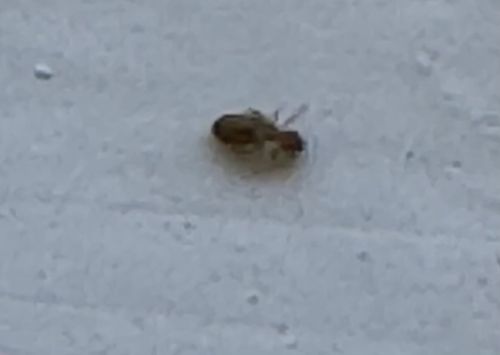
Fruit Fly
Most commonly Drosophila melanogaster (common fruit fly) or other species within the Drosophilidae family.
- Order & Family
- Order: Diptera, Family: Drosophilidae
- Size
- Typically 2-4 mm (0.08-0.16 inches) in length.
Natural Habitat
Fruit flies are commonly found in kitchens, pantries, and any areas where ripe fruits, vegetables, or fermenting organic matter are present. They can also be found outdoors near gardens, compost piles, and recycling bins.
Diet & Feeding
Adult fruit flies primarily feed on the yeast found on ripe, fermenting, or decaying fruits and vegetables, as well as sugary liquids, spilled drinks, and alcohol. Their larvae feed on the decaying fruit matter itself.
Behavior Patterns
Fruit flies are attracted to ripe and fermenting fruits and vegetables. They are known for their rapid reproduction rate, with a life cycle from egg to adult taking as little as 8-10 days under ideal conditions. Females can lay hundreds of eggs. They are most active during the day and are often seen hovering around food sources.
Risks & Benefits
Risks: Primarily a nuisance pest in homes, kitchens, and food processing facilities. They can contaminate food with bacteria and other pathogens carried on their bodies. In laboratories, certain species (e.g., Drosophila melanogaster) are extensively used for genetic research and have provided significant benefits to understanding genetics and development. Benefits: In nature, they contribute to the decomposition of organic matter. In research, they are a powerful model organism for genetic and biological studies.