
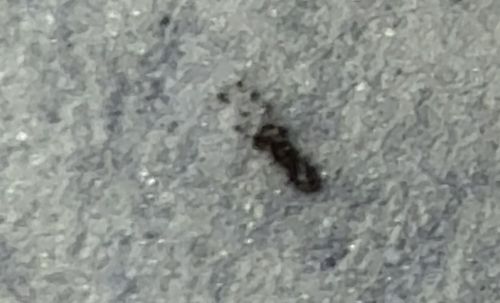
Springtail
Collembola (subclass)
- Order & Family
- Entognatha (Order); Families vary (e.g., Isotomidae, Entomobryidae)
- Size
- Minute; typically 1/16 to 1/8 inch (1 to 3 mm) long.
Natural Habitat
Typically found in damp, humid environments. Outdoors they live in leaf litter, soil, and rotting wood. Indoors, they may appear in bathrooms, basements, or near houseplants where moisture is present.
Diet & Feeding
Detritivores; they feed on decaying organic matter, bacteria, fungi, algae, mold, and sometimes pollen. They help decompose organic material.
Behavior Patterns
Named for their ability to jump or 'spring' away when disturbed using a forked tail-like structure called a furcula. They are active year-round but require high humidity to survive. They do not fly.
Risks & Benefits
Risks: None to humans or pets; they do not bite, sting, or transmit disease. They are primarily a nuisance when found indoors in large numbers. Benefits: Ecologically beneficial as decomposers that help recycle nutrients in soil.