
Community identification
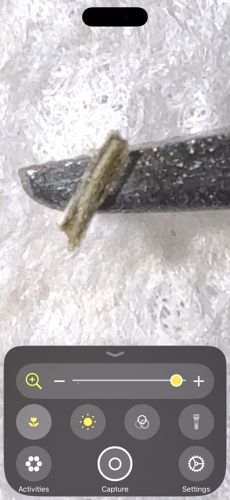
Case-bearing Clothes Moth (Larva)
Tinea pellionella
- Order & Family
- Lepidoptera: Tineidae
- Size
- Larval case is typically 5mm to 10mm in length.
Natural Habitat
Dark, undisturbed areas in homes such as closets, under furniture, or rugs, particularly where animal-based fibers are present.
Diet & Feeding
Keratin-rich organic materials including wool, fur, feathers, silk, hair, and occasionally dried stored food products.
Behavior Patterns
The larva builds a portable silken case incorporating debris and fibers from its food source. It carries this case as it feeds and eventually pupates inside it. Unlike webbing clothes moths, they do not leave heavy silken mats.
Risks & Benefits
Significant household pest that causes damage to clothing, upholstery, and carpets. They pose no direct health risk to humans but can cause costly destruction to textiles.