
Community identification
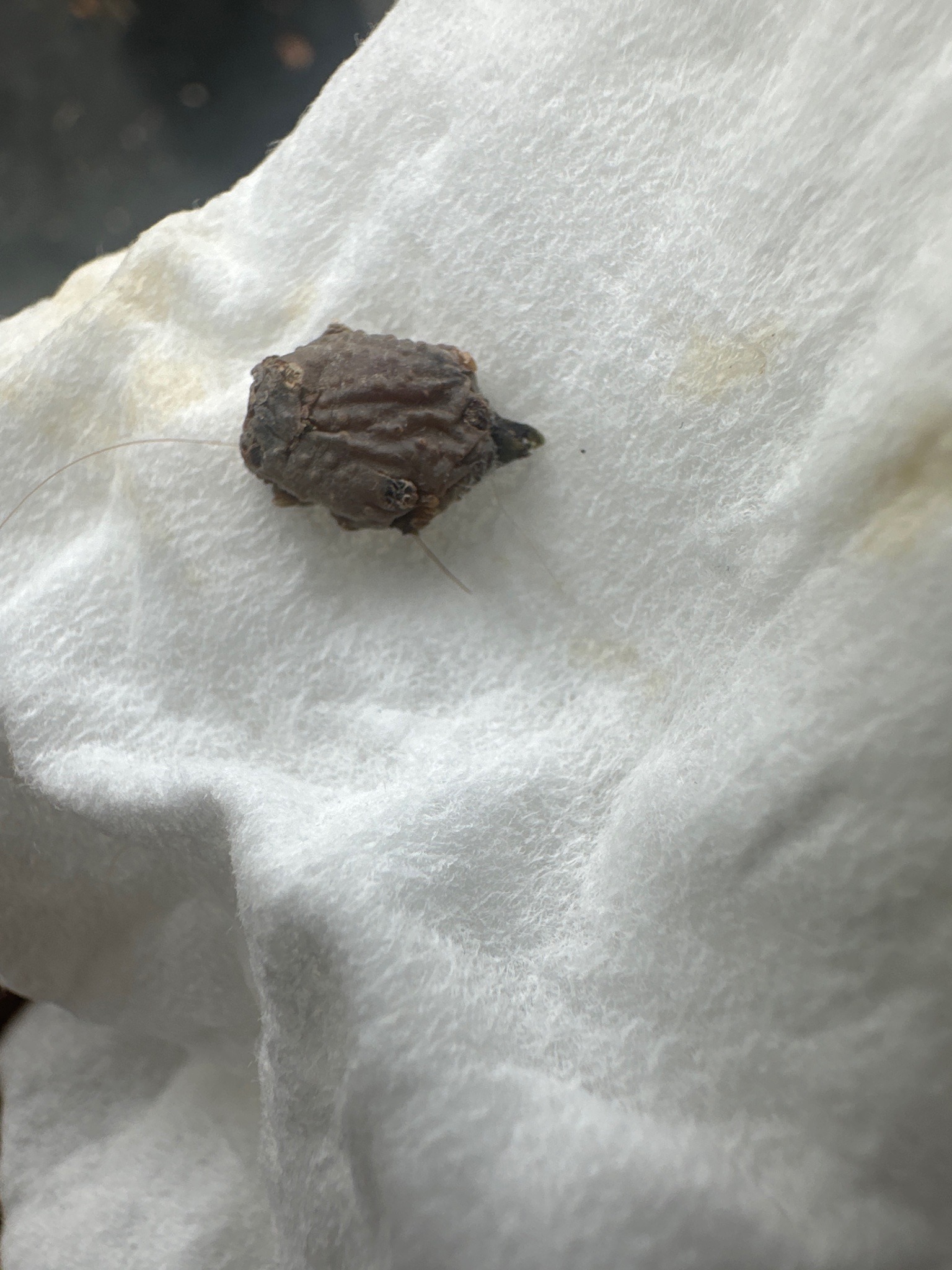
Mantid Ootheca (Egg Case)
Mantodea (various species)
- Order & Family
- Order: Mantodea; Family: Mantidae
- Size
- 10mm to 30mm in length depending on species.
Natural Habitat
Found attached to twigs, stems, walls, or fences in gardens and wooded areas.
Diet & Feeding
The developing nymphs do not eat until they hatch; once hatched, they are carnivorous, eating any small insects they can capture.
Behavior Patterns
The female produces a frothy secretion that hardens into a protective, papery case called an ootheca. It protects the eggs from predators and freezing temperatures through winter until spring hatching.
Risks & Benefits
Highly beneficial to gardens as they hatch into hundreds of praying mantises that act as natural pest control. They pose no risk to humans.