
Azure Bluet Identification Guide
A small blue-and-black pond damselfly best told apart from similar bluets by an isolated dark spot near the base of its abdomen.
Read the full Azure Bluet encyclopedia entry →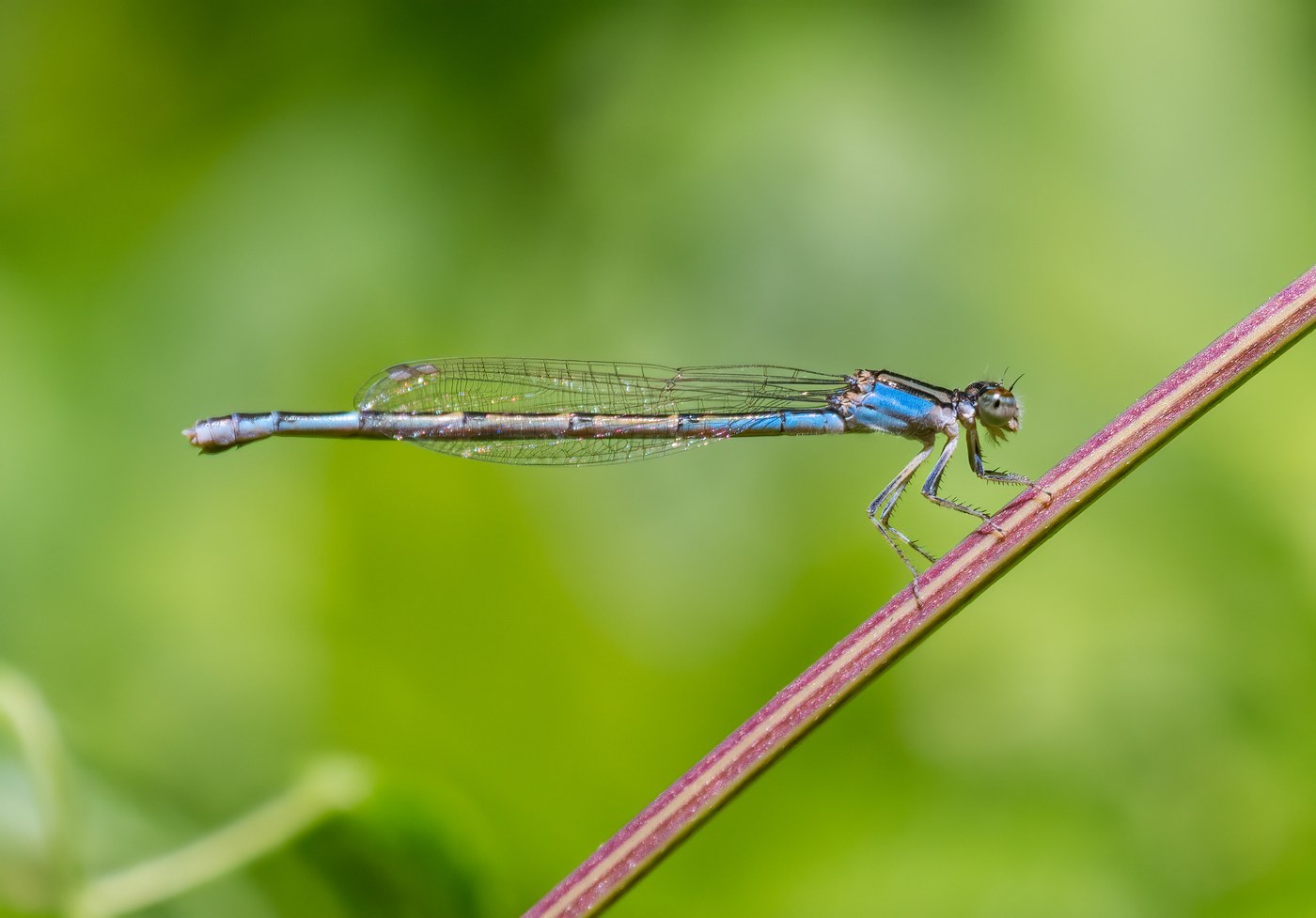
Key Visual Features
The Azure Bluet is a small, slender damselfly, about 1.1 to 1.3 inches (28-33 mm) long, sharing the general blue-and-black look common to the bluet group.
- Body color: Mature males show a blue thorax with black stripes and a mostly blue abdomen broken by black rings, with black coloring concentrated on the last few segments near the tip.
- Diagnostic mark: A small, isolated black spot or oval on the upper side of one of the early abdominal segments (near the base), separated from other black markings — a useful clue when comparing against other bluets.
- Body shape: Thin, elongated abdomen typical of pond damselflies, with wings folded over the back at rest.
- Female coloring: Generally paler and less vividly blue than males, often blue-gray to tan with a similar striped thorax pattern.
- Eyes: Blue in mature males, often with a darker patch on top of the head.
Where and When You'll See It
Azure Bluets are typically found at ponds and lakes with dense aquatic vegetation, including lily pads and submerged plants, and are often associated with fish-bearing waters more than some other bluet species. They are active from late spring through summer, usually seen perched low over the water on floating or emergent leaves, close to the water's surface.
Similar-Looking Species
- Familiar Bluet: Extremely similar overall pattern; distinguishing the two reliably usually requires comparing the exact position and shape of dark abdominal markings, sometimes with close photos.
- Other common bluets: As a group, bluets are difficult to separate by general coloring alone, and confirmation often depends on examining the small terminal appendages at the abdomen tip.
- Blue-fronted Dancer: A different genus with a bouncier flight style and a more solidly black abdomen tip rather than isolated spots.
Quick ID Checklist
- Small, slender blue-and-black damselfly
- Isolated black spot near the base of the abdomen, separated from other markings
- Perches low on floating vegetation such as lily pads
- Found at ponds and lakes with dense aquatic plant cover
- Best confirmed alongside other bluets by close comparison of abdomen markings
Frequently asked questions
What feature helps separate the Azure Bluet from other bluets?
An isolated black spot or oval near the base of the abdomen, distinct from the other black rings and markings, is a useful clue, though close comparison is often still needed.
What kind of pond vegetation is this species associated with?
Dense aquatic plant cover such as lily pads and submerged vegetation, where it commonly perches just above the water's surface.
Are bluets generally easy to identify to exact species?
No, bluets as a group are known for being difficult to tell apart, and confirming the exact species often requires a close look at the small appendages at the tip of the abdomen.
When is the best time of year to look for an Azure Bluet?
Late spring through summer is the typical flight season, with adults most visible perched low over vegetated pond water.