
Eastern Forktail Identification Guide
A tiny, common damselfly with a green-striped thorax and a mostly black abdomen tipped in bright blue.
Read the full Eastern Forktail encyclopedia entry →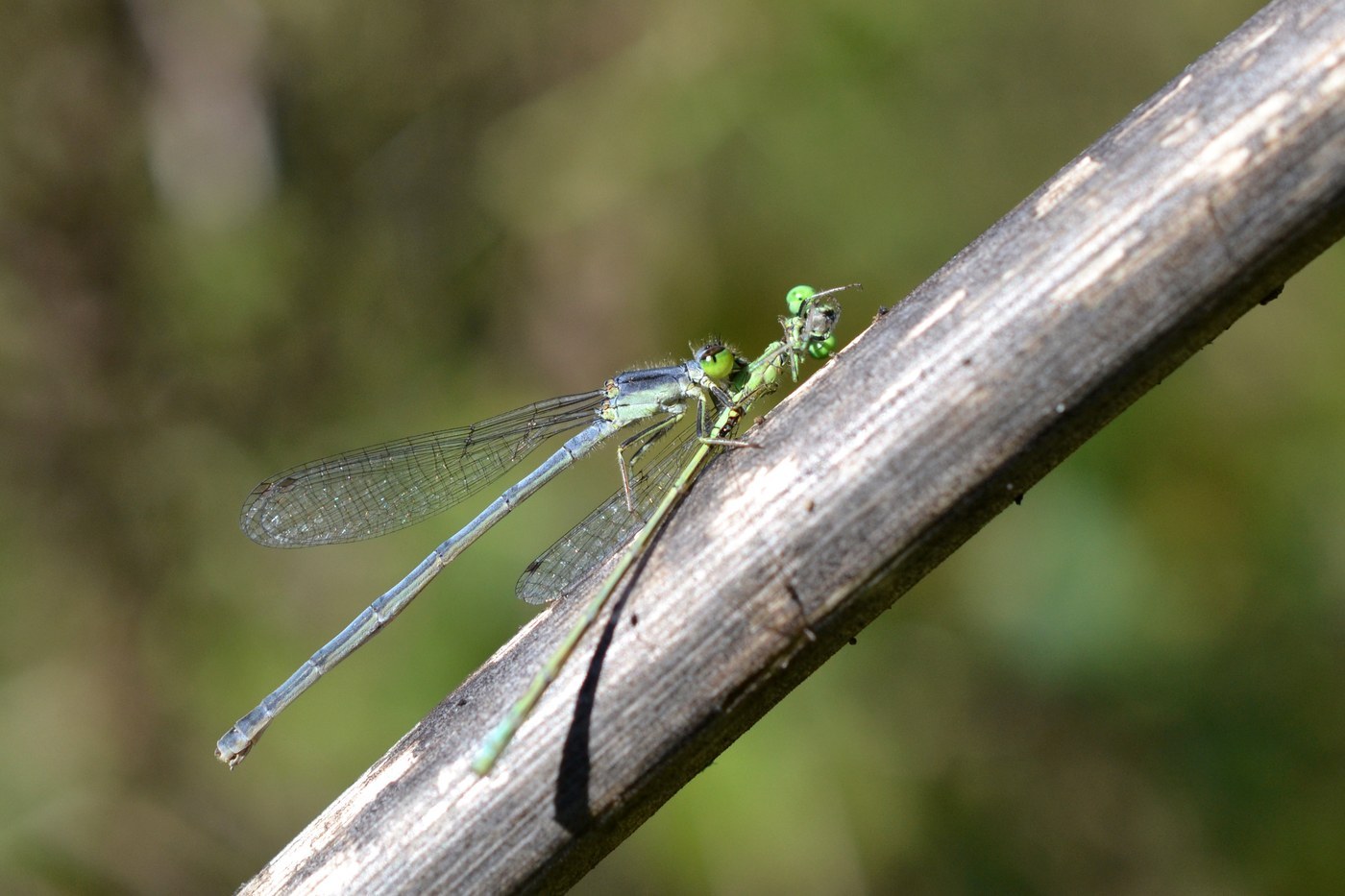
Key Visual Features
The Eastern Forktail is one of the smallest and most common damselflies, about 0.9 to 1.2 inches (23-30 mm) long, with a slender body and a short, forked-looking tip to the abdomen in males.
- Body color: Mature males have a bright green thorax marked with a black stripe down the top, and a mostly black abdomen that ends abruptly in bright blue on the last one to two segments.
- Body shape: Very slender and thin abdomen, among the thinnest of common pond damselflies, with wings held together over the back at rest.
- Female coloring: Highly variable — young females are often bright orange, maturing to a blue-gray or pale green with black thoracic markings as they age, which can make females look like an entirely different species at different life stages.
- Eyes: Green in males, variable in females depending on age.
- Legs: Pale, thin, and lightly striped.
Where and When You'll See It
Eastern Forktails are extremely adaptable and can be found at almost any still or slow-moving water body, including ponds, marshes, ditches, and slow streams, tolerating a wide range of water quality. They are active from spring through fall across much of their range, often the first damselfly species seen in a season and one of the last to disappear in autumn.
Similar-Looking Species
- Fragile Forktail: Very similar black-and-green pattern, but shows a pair of short, pale exclamation-point-shaped marks on the top of the thorax, which the Eastern Forktail lacks.
- Bluets: Generally show more extensive blue on the abdomen rather than a mostly black abdomen with just a small blue tip.
- Rambur's Forktail: Similar size and shape but with different thoracic stripe details; range and close comparison of thorax markings help separate the two.
Quick ID Checklist
- Very small, slender damselfly, under 1.2 inches long
- Green-striped thorax with a mostly black abdomen
- Bright blue tip on the last one to two abdominal segments (males)
- Females can appear orange when young, later turning blue-gray or green
- Found in nearly any still or slow water, very common and widespread
Frequently asked questions
What is the easiest field mark for an Eastern Forktail?
A mostly black abdomen that ends abruptly in a small patch of bright blue on the last segment or two, paired with a green-striped thorax, in mature males.
Why do female Eastern Forktails look so different from each other?
Females change color as they mature, often starting out bright orange when young and shifting to blue-gray or pale green with age, so individuals of different ages can look quite different.
How do I tell an Eastern Forktail from a Fragile Forktail?
The Fragile Forktail shows a pair of short, pale exclamation-point-shaped marks on top of the thorax that the Eastern Forktail does not have.
What habitats can this species be found in?
Nearly any still or slow-moving water, including ponds, marshes, ditches, and slow streams, since it tolerates a wide range of water conditions.