Firefly Beetle Identification Guide
Spot a firefly by its soft, elongated body and the glowing light organ on its abdomen.
Read the full Firefly Beetle encyclopedia entry →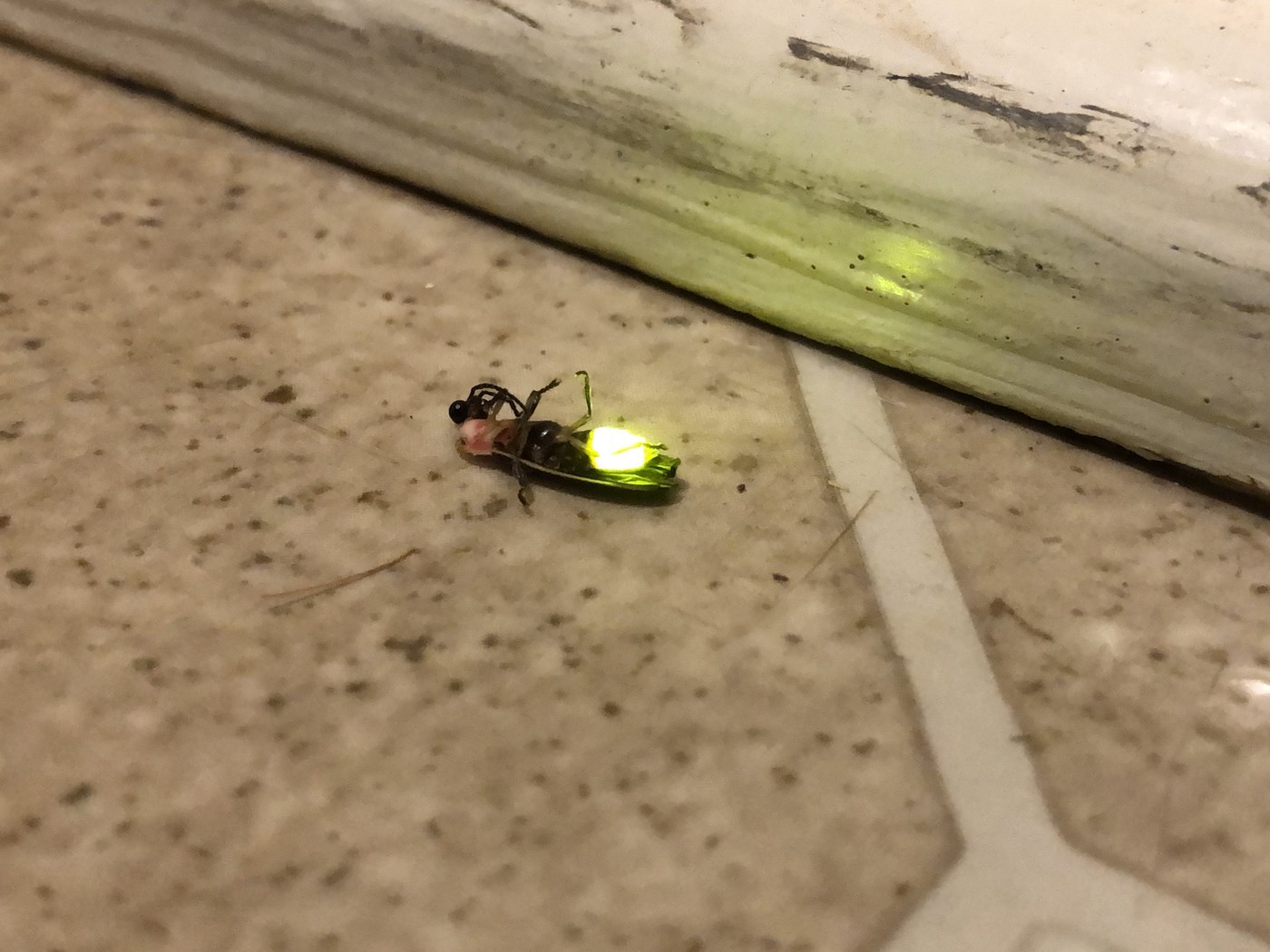
Key Visual Features
- Body shape: Elongated and somewhat flattened, with a soft, leathery exoskeleton rather than the hard shell typical of many beetles.
- Size: Generally 1/3 to 3/4 inch long, varying by species.
- Color: Typically dark brown or black wing covers, often with a reddish, orange, or yellow-bordered pronotum (the plate covering the head from above).
- Light organ: The defining feature is a pale, translucent segment near the tip of the abdomen that produces a soft yellow, green, or amber glow, most visible at dusk or after dark.
- Head: Often partly or fully hidden beneath the pronotum when viewed from above.
- Wings: Soft, flexible wing covers (elytra) protect a pair of membranous flight wings, allowing slow, hovering, blinking flight.
- Legs and antennae: Six slender legs and thread-like antennae of moderate length.
Where and When You'd See One
Fireflies are found in warm, humid environments such as meadows, woodland edges, marshes, and gardens, often near tall grass, shrubs, or standing water. Adults are most active at dusk and into the night during the warmer months of late spring through summer, when their blinking lights are used to communicate. During the day they tend to rest on vegetation, largely inactive and easy to overlook.
Similar-Looking Creatures
- Click beetles: Similarly elongated but with a harder body and no light organ, and they can snap themselves upright with an audible click.
- Soldier beetles: Close relatives with a similar soft-bodied shape and coloring but without the ability to produce light.
- Net-winged beetles: Flattened, brightly patterned bodies but lacking a glowing abdominal segment.
- Non-glowing beetle look-alikes at night: Any dark, soft-bodied beetle seen after dark without a blinking light is likely a different species, since the glow is unique to true fireflies.
Quick ID Checklist
- Soft, elongated, somewhat flattened body, usually dark with reddish or yellow trim on the pronotum.
- Pale, light-producing segment near the tip of the abdomen.
- Slow, blinking flight visible at dusk or night.
- Found in humid meadows, woodland edges, and gardens.
- Most active in warm months, especially late spring through summer.
Frequently asked questions
What is the clearest way to confirm a firefly's identity?
Look for the pale, light-producing segment near the tip of the abdomen; when active at dusk it will glow or blink, which is a feature unique to true fireflies among beetles.
Do all fireflies glow the same color?
No, the glow can appear yellow, green, or amber depending on the species, though the overall soft, elongated body shape stays fairly consistent across firefly species.
How is a firefly different from a click beetle?
Fireflies have a soft, leathery body and a glowing abdominal segment, while click beetles have a harder exoskeleton, no light organ, and can snap their bodies to flip upright with a clicking sound.
When is the best time of day to see fireflies for identification?
Fireflies are easiest to identify at dusk and after dark during warm months, when their blinking light patterns are visible over grassy or humid areas.
Firefly Beetle identified by the community
Recent Firefly Beetle finds identified with Bug Identifier.