Pillbug Identification Guide
Recognize the pillbug by its armored, segmented shell and its signature ability to roll into a tight ball when disturbed.
Read the full Pillbug encyclopedia entry →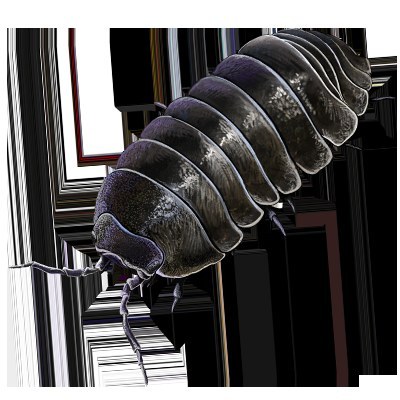
Key Visual Features
The pillbug (commonly Armadillidium vulgare) is a land-dwelling crustacean, not an insect, easily recognized by its armored, plated body.
- Size: Typically 9-17 mm long when fully grown, oval in overall outline.
- Body shape: Distinctly segmented, with a series of overlapping, rounded plates running from just behind the head to the rear, giving a smooth, armored appearance similar to a tiny armadillo.
- Color: Slate gray to dark bluish-gray, sometimes with a slightly mottled texture, though some individuals appear more uniformly gray-brown.
- Legs: Seven pairs of short, jointed legs, one pair per body segment, visible along the underside when the animal is active.
- Antennae: A single pair of short, visible antennae extending from the head, used to sense the surrounding environment.
- Signature behavior: Able to roll into a tight, near-perfect ball when disturbed, tucking legs and head completely inside the armored plates — this conglobation behavior is one of the most reliable identifying traits.
- Eyes: Small, simple eye clusters on either side of the head, though not prominent at a glance.
Where and When You'd See It
Pillbugs favor damp, dark environments and are most active during humid conditions, particularly after rainfall or in the early morning and evening hours. They are commonly found beneath rocks, logs, mulch, leaf litter, and other moist debris in gardens, yards, and along building foundations. Being crustaceans, they breathe through gill-like structures and need moisture to survive, which is why they retreat to damp shelter during the drier daytime hours.
Similar-Looking Bugs
- Sowbugs (woodlice that don't roll up): Very similar in size, color, and habitat, but sowbugs cannot roll into a tight ball and often have two small tail-like appendages visible at the rear end, which pillbugs lack.
- Pill millipedes: Also roll into a ball, but have many more, much shorter legs per segment and a more uniformly cylindrical, glossy appearance.
- Beetles: Generally have a hardened, glossy shell divided into fewer, larger plates and lack the many-legged, overlapping-segment structure of a pillbug.
Quick ID Checklist
- Gray, oval body with 7 pairs of legs and overlapping armored plates
- Rolls into a tight, complete ball when disturbed
- No visible tail-like appendages at the rear (unlike sowbugs)
- Found in damp, shaded spots like under rocks, logs, or mulch
- Most active in humid conditions and after rain
Frequently asked questions
What is the easiest way to tell a pillbug from a sowbug?
The clearest test is behavior: pillbugs can roll into a tight, complete ball when disturbed, while sowbugs cannot. Sowbugs also usually show two small tail-like appendages at the rear that pillbugs lack.
Is a pillbug an insect?
No, despite its bug-like appearance, the pillbug is a land-dwelling crustacean related to shrimp and crabs, not an insect.
Why do pillbugs roll into a ball?
This rolling behavior, called conglobation, is a natural defensive response that tucks the legs and head inside the armored plates, presenting a smooth, protected shape to the outside world.
Where are pillbugs most likely to be found?
Look under rocks, logs, mulch, and leaf litter in damp, shaded areas, since pillbugs need moisture and tend to avoid dry, exposed conditions.
Pillbug identified by the community
Recent Pillbug finds identified with Bug Identifier.