
Small Emperor Moth Identification Guide
Learn to recognize the Small Emperor Moth by its bold wing eyespots and feathery antennae.
Read the full Small Emperor Moth encyclopedia entry →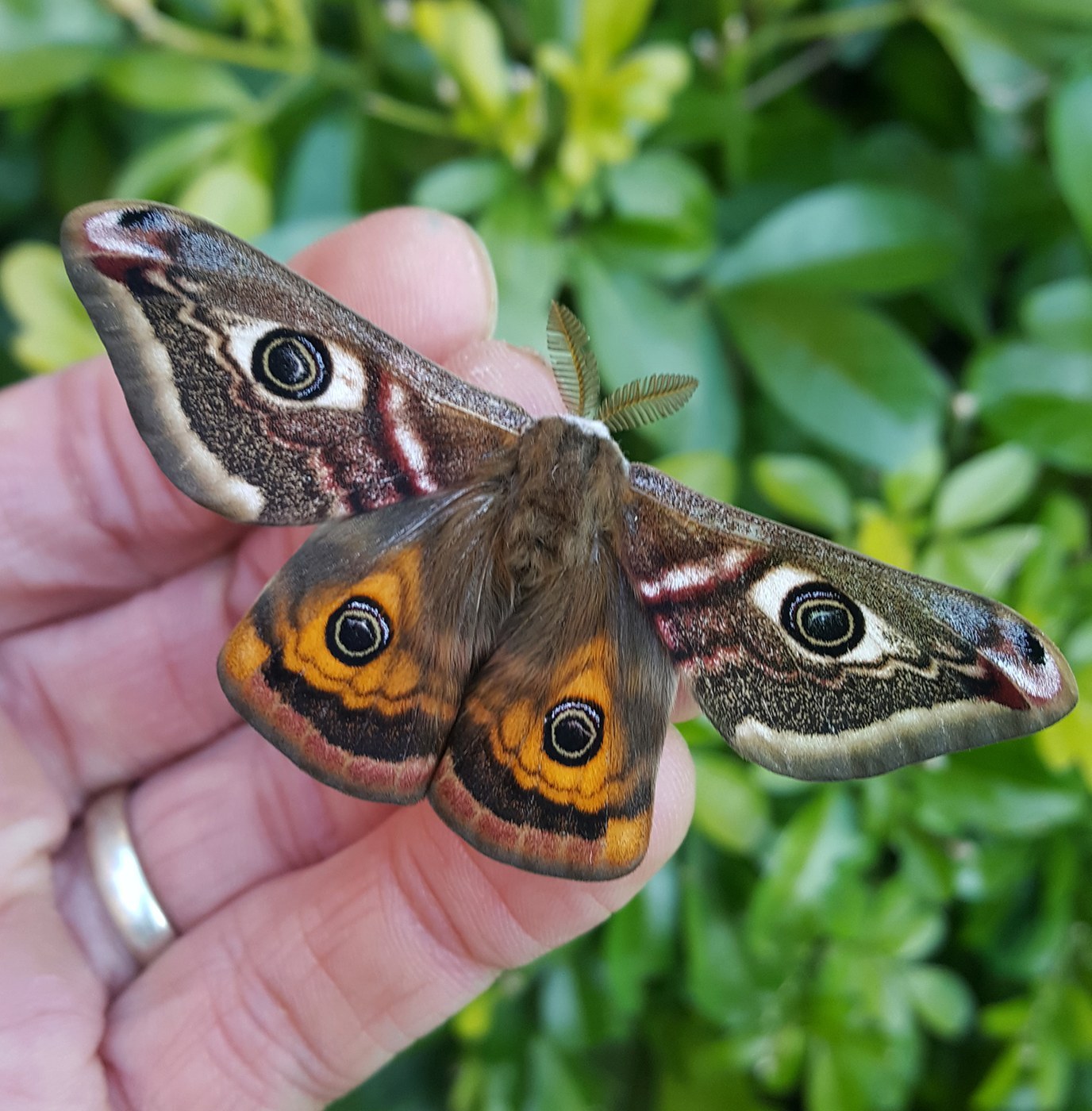
Key Visual Features
- Medium-large moth with a wingspan of roughly 5-7 cm (males smaller than females).
- Each wing bears a single large, dark eyespot ringed in black, white, and reddish-orange, set against a grey-brown to reddish-brown background.
- Wings have wavy, scalloped outer margins with a pale wavy band crossing each wing.
- Males have broad, feathery (bipectinate) antennae used to detect female pheromones; females have narrower, thread-like antennae.
- Body is stout and densely furred, colored in shades of grey-brown to rusty orange.
- Females are noticeably larger and paler than males, with more rounded forewings.
Where and When You're Likely to See It
- Found across much of Europe and into temperate Asia, favoring open habitats such as heathland, moorland, hedgerows, scrubby grassland, and woodland edges.
- Caterpillars feed on heather, bramble, hawthorn, and other low shrubs, so adults are most common near these food plants.
- Adults fly in a single generation from early spring into early summer (roughly March to May in much of its range).
- Males are day-flying and can be seen zigzagging low over vegetation in sunny weather, actively searching for females by scent.
- Females are largely nocturnal and rest on vegetation during the day, making them harder to spot than the fast-flying males.
- The distinctive spiny green caterpillars with black bands, seen later in the season, are also a useful identification clue for confirming the species' presence in an area.
Similar-Looking Species
- The Emperor Moth (a closely related, larger species in some regions) looks almost identical but is typically bigger with slightly different eyespot proportions; range and size are the best distinguishing clues.
- Other eyespotted moths, such as certain hawkmoths, usually show elongated, narrower wings rather than the rounded, scalloped wings of the Small Emperor Moth.
- The furry body and feathered male antennae help separate it from butterflies, which have clubbed antennae and slimmer bodies.
Quick ID Checklist
- Single large eyespot on each wing, ringed in contrasting colors.
- Feathery, comb-like antennae (most obvious in males).
- Stout, furry grey-brown to rusty body.
- Scalloped wing edges with a pale wavy crossband.
- Male seen flying low and fast over open ground in daylight.
Frequently asked questions
How can I tell a male from a female Small Emperor Moth?
Males are smaller, more colorful, and have broad feathery antennae used to detect scent; females are larger, paler, and have narrower thread-like antennae.
Why do I only see this moth flying during the day?
Males are day-flying and patrol open habitat in sunshine looking for females, while females tend to rest by day and are active mainly after dark.
What plants should I check if I want to find this moth?
Look near heather, bramble, and hawthorn, which are common caterpillar food plants and where adults are most often encountered.
Is the eyespot pattern the same on every individual?
The basic pattern of one ringed eyespot per wing is consistent, though the exact shade of the background color can vary from grey-brown to rusty orange.