Wasp Identification Guide
Learn to distinguish wasps from bees by their smooth, slender bodies and narrow waist.
Read the full Wasp encyclopedia entry →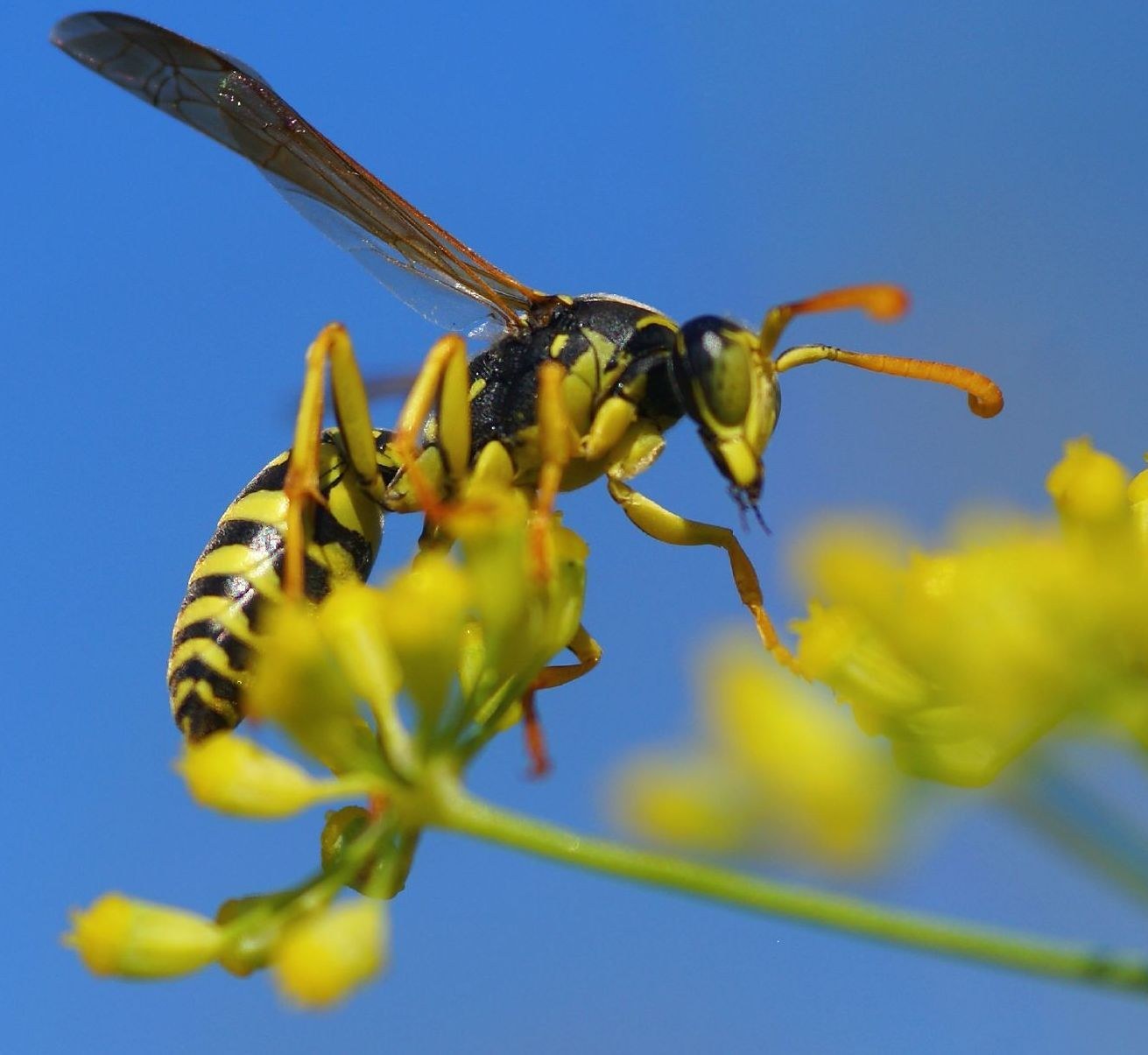
Key Visual Features
"Wasp" covers a huge variety of species, but most share a set of core features that separate them from bees and other flying insects.
- The body is generally smooth and shiny rather than densely fuzzy, though some hair may be present, especially compared to the visibly hairy bodies of most bees.
- A narrow, pinched "waist" (the petiole) connects the thorax to the abdomen, often making the waist appear thread-thin in many species.
- Coloring frequently includes combinations of black and yellow, black and white, or solid black, sometimes with metallic blue or green tones in certain groups.
- Wings are clear to lightly tinted and are folded lengthwise along the body at rest in many common species, giving a narrower resting silhouette than an open-winged insect.
- Legs are long and often dangle noticeably during flight, and the antennae are long, thin, and bent (elbowed) in many species.
- Body size varies enormously by species, from tiny parasitic wasps just a few millimeters long to large solitary wasps over an inch (2.5+ cm) in length.
Where and When You'd See It
Wasps occupy nearly every outdoor habitat, from gardens and forests to open fields and urban areas, and different species build very different structures: some construct papery nests, some burrow into soil, and others build mud tubes. Activity is highest on warm, sunny days from spring through fall, with populations and nest sizes typically peaking in late summer. Many wasps are drawn to sweet substances, ripening fruit, and protein sources, so they are commonly seen around gardens, trash areas, and outdoor food sources during the day.
Similar-Looking Bugs
- Bees are usually rounder-bodied and noticeably fuzzy with hairs adapted for carrying pollen, while wasps have a smoother, sleeker body and lack the dense body hair.
- Hornets are technically a type of large wasp, distinguished mainly by their bigger size and rounder head shape compared to many smaller wasp species.
- Flies mimicking wasps (hoverflies, for example) may show yellow-and-black banding but have only one pair of wings and short, stubby antennae, unlike a wasp's two pairs of wings and long, elbowed antennae.
- The narrow waist and smooth body are the most consistent features for separating true wasps from bees and wasp-mimicking flies.
Quick ID Checklist
- Smooth, mostly hairless body compared to fuzzy bees
- Distinctly narrow, pinched waist between thorax and abdomen
- Long, elbowed antennae and long, dangling legs in flight
- Two pairs of clear to lightly tinted wings, folded lengthwise at rest
- Common in black-and-yellow or black-and-white color combinations
Frequently asked questions
What is the main visual difference between a wasp and a bee?
Wasps have a smooth, sleek body and a distinctly narrow waist, while bees are rounder and covered in noticeable body hair adapted for collecting pollen.
How can I tell a wasp from a hoverfly mimicking one?
A true wasp has two pairs of wings and long, elbowed antennae, while a hoverfly has only one pair of wings and short, stubby antennae.
Do all wasps look alike?
No, the group includes enormous variety, from tiny parasitic species a few millimeters long to large solitary wasps over an inch long, though most share the smooth body and narrow waist.
When are wasps most commonly seen?
They are most active on warm, sunny days from spring through fall, with activity often peaking in late summer as colonies or populations grow.
Wasp identified by the community
Recent Wasp finds identified with Bug Identifier.