
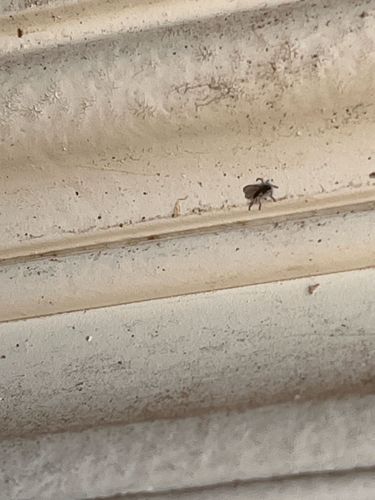
Community identification
Pseudoscorpion
Chelifer cancroides
- Order & Family
- Order Pseudoscorpiones, Family Cheliferidae
- Size
- 2 to 8 millimeters (very small)
Natural Habitat
Found in leaf litter, under tree bark, in soil, and frequently indoors in basements, bathrooms, or amongst old books and papers.
Diet & Feeding
Carnivorous; they prey on tiny invertebrates such as moth larvae, carpet beetle larvae, mites, booklice, and small flies.
Behavior Patterns
They are solitary hunters known for 'phoresy'—the practice of hitching rides on larger flying insects like flies or beetles to move to new locations. They use their large pincers (pedipalps) to catch prey and inject venom.
Risks & Benefits
Highly beneficial to humans as they act as natural pest control by eating common household pests like booklice and mites. They are harmless to humans and pets because they lack a stinger and their mouthparts/pincers are too small to penetrate human skin.