
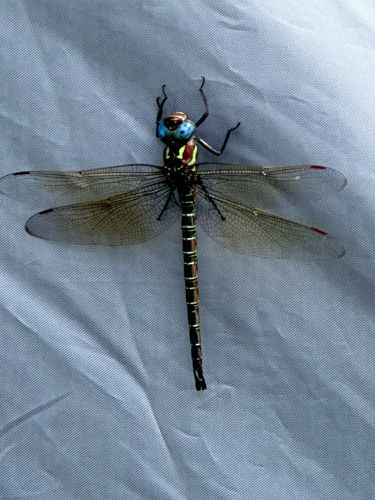
Dragonfly
Not identifiable to a single species from the image. It appears to be a species within the order Odonata, likely belonging to the family Aeshnidae (e.g., a Darner Dragonfly) given its robust body, large eyes, and clear wings. Without more specific markings or geographic location, it's difficult to pinpoint the exact scientific name.
- Order & Family
- Order: Odonata, Suborder: Anisoptera (true dragonflies). The specific family can vary, but common ones include Aeshnidae (hawkers/darners), Libellulidae (skimmers), and Corduliidae (emerald dragonflies) given the appearance, it could be an Aeshnid.
- Size
- Dragonflies vary in size depending on the species, generally ranging from 2 cm (0.8 inches) to 12 cm (4.7 inches) in body length, with wingspans from 3 cm (1.2 inches) to over 15 cm (6 inches). The one in the image appears to be a medium to large-sized species.
Natural Habitat
Dragonflies are closely associated with water bodies during their nymph stage. Adults are found near various aquatic environments like ponds, lakes, rivers, streams, and marshes. They require clean water for successful reproduction and nymph development.
Diet & Feeding
Adult dragonflies are predatory insects, primarily feeding on other insects such as mosquitoes, flies, gnats, and sometimes smaller butterflies and moths, which they catch in flight. Dragonfly nymphs (larvae) are also predatory, feeding on aquatic insects, tadpoles, or small fish.
Behavior Patterns
Dragonflies are excellent fliers. They are territorial and often seen in agile, acrobatic flight, hunting for prey or defending their territory. They undergo incomplete metamorphosis; nymphs live in water, molting multiple times before emerging as adults. Adults are typically active during the day.
Risks & Benefits
Dragonflies pose no known risks to humans; they do not sting or bite people. They are highly beneficial insects within ecosystems. As predators, they help control populations of pest insects, particularly mosquitoes and flies, which can be disease vectors. They also serve as an important food source for birds, fish, and other aquatic and terrestrial animals. Their presence is often an indicator of a healthy aquatic environment.