
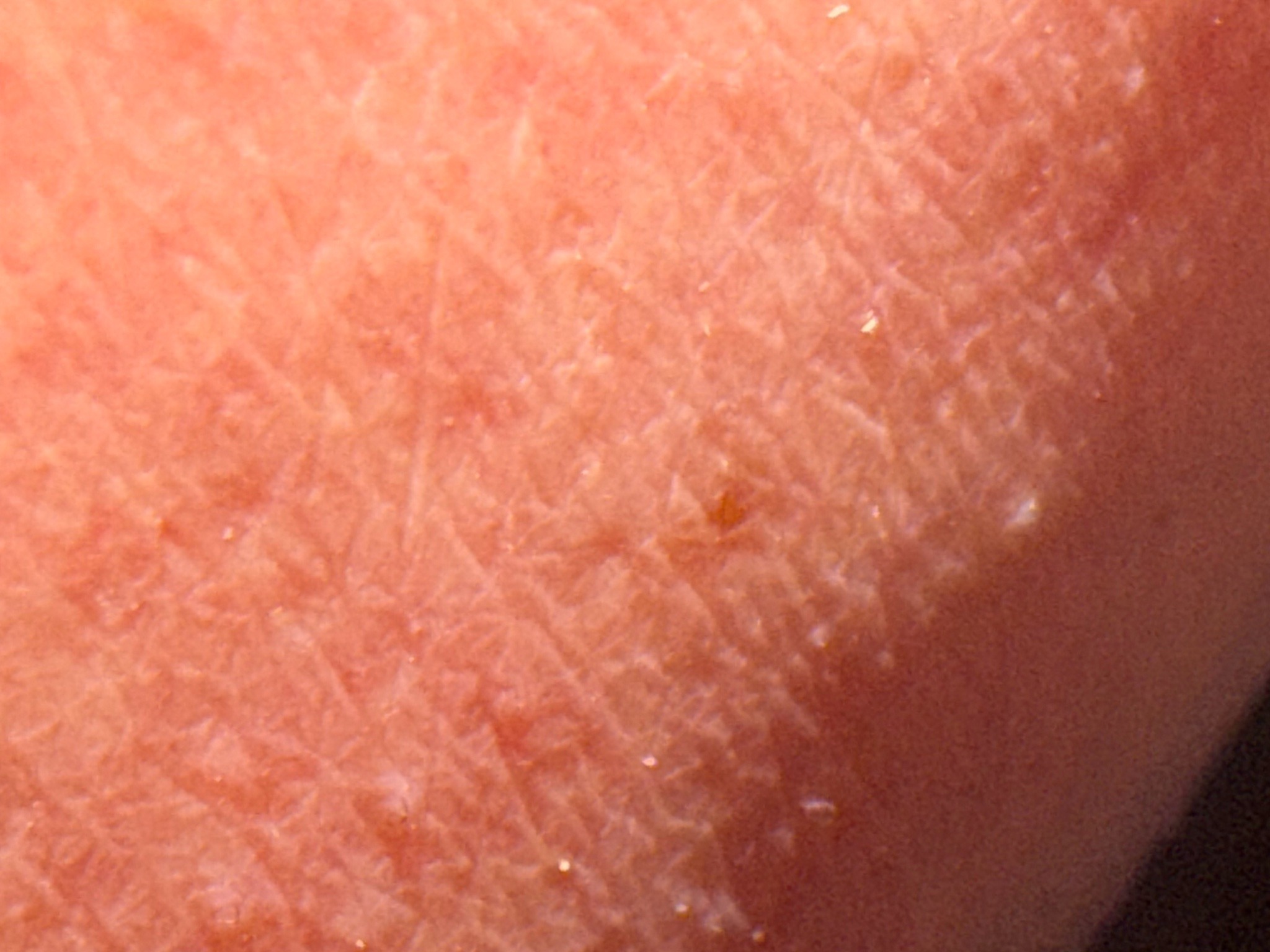
Community identification
Likely human flea
Pulex irritans (tentative identification)
- Order & Family
- Siphonaptera; Pulicidae
- Size
- Approximately 1.5–3.3 mm long; the photograph provides insufficient scale for confirmation.
Natural Habitat
Often found in bedding, carpets, upholstery, pet areas, and animal nests; adults remain on hosts while immature stages develop in the environment.
Diet & Feeding
Adults consume blood from mammals, including humans. Larvae feed mainly on organic debris and dried blood in their surroundings.
Behavior Patterns
Wingless, laterally flattened, and highly mobile; adults jump between hosts and females lay eggs in resting areas. Fleas can reproduce rapidly under warm, humid conditions.
Risks & Benefits
Bites cause itchy, sometimes allergic skin reactions and can transmit pathogens, including organisms associated with flea-borne diseases. They are also food for predators and contribute to ecosystem nutrient cycling.