
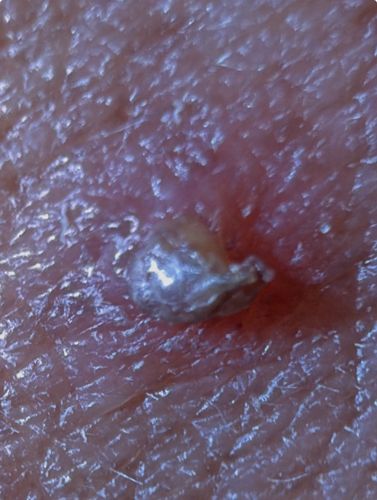
Red Imported Fire Ant (Image depicts the characteristic sting pustule caused by the ant)
Solenopsis invicta
- Order & Family
- Order: Hymenoptera, Family: Formicidae
- Size
- Workers vary in size from 1.5 mm to 6 mm (0.06 to 0.24 inches)
Natural Habitat
Open sunny areas such as lawns, pastures, parks, and roadsides; they build distinctive soil mounds but can also nest in rotting logs or under pavement.
Diet & Feeding
Omnivorous; they feed on a wide variety of foods including other insects, sugary plant secretions, seeds, and oils.
Behavior Patterns
Highly aggressive when their mound is disturbed; they swarm quickly and crawl up vertical surfaces. A single ant will bite to anchor itself and then sting repeatedly in a circle.
Risks & Benefits
Risks: Their venom causes a burning sensation and typically results in the formation of a sterile white pustule (blister) on the skin approximately 24 hours later, as seen in the image. They can also cause anaphylactic shock in allergic individuals. Benefits: They are effective predators of agricultural pests like ticks, boll weevils, and caterpillars.