
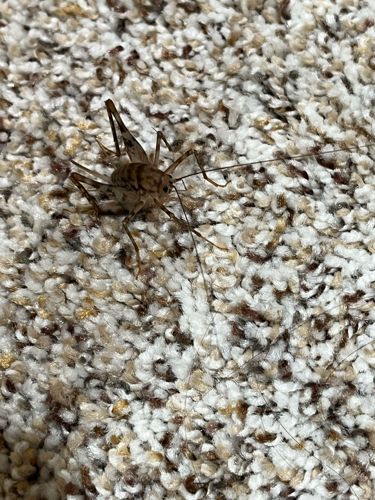
Camel Cricket, Cave Cricket, Spider Cricket
Various genera within Rhaphidophoridae, such as Ceuthophilus or Tachycines
- Order & Family
- Order: Orthoptera, Family: Rhaphidophoridae
- Size
- Typically range from 1/2 inch to 1.5 inches (1.2 cm to 3.8 cm) in body length, not including their long antennae and legs.
Natural Habitat
Outdoors, they prefer cool, damp, dark environments such as caves, hollow logs, under rocks, and in dense vegetation. Indoors, they are commonly found in basements, crawl spaces, utility rooms, garages, and sheds.
Diet & Feeding
They are omnivores and scavengers, feeding on a wide variety of organic matter including fungi, plants, dead insects, fabric, and even other camel crickets (cannibalistic behavior has been observed).
Behavior Patterns
Camel crickets are nocturnal and are drawn to dark, damp environments. They are known for their jumping ability, which they use as a primary defense mechanism when startled. Unlike true crickets, they do not chirp. They are often found in basements, crawl spaces, and other undisturbed areas within homes.
Risks & Benefits
Risks: Primarily a nuisance pest indoors. While they can damage fabrics, cardboard, and houseplants, the damage is usually minor unless there's a large infestation. They do not bite or sting and are not known to transmit diseases. Benefits: Outdoors, they play a minor role as scavengers.