
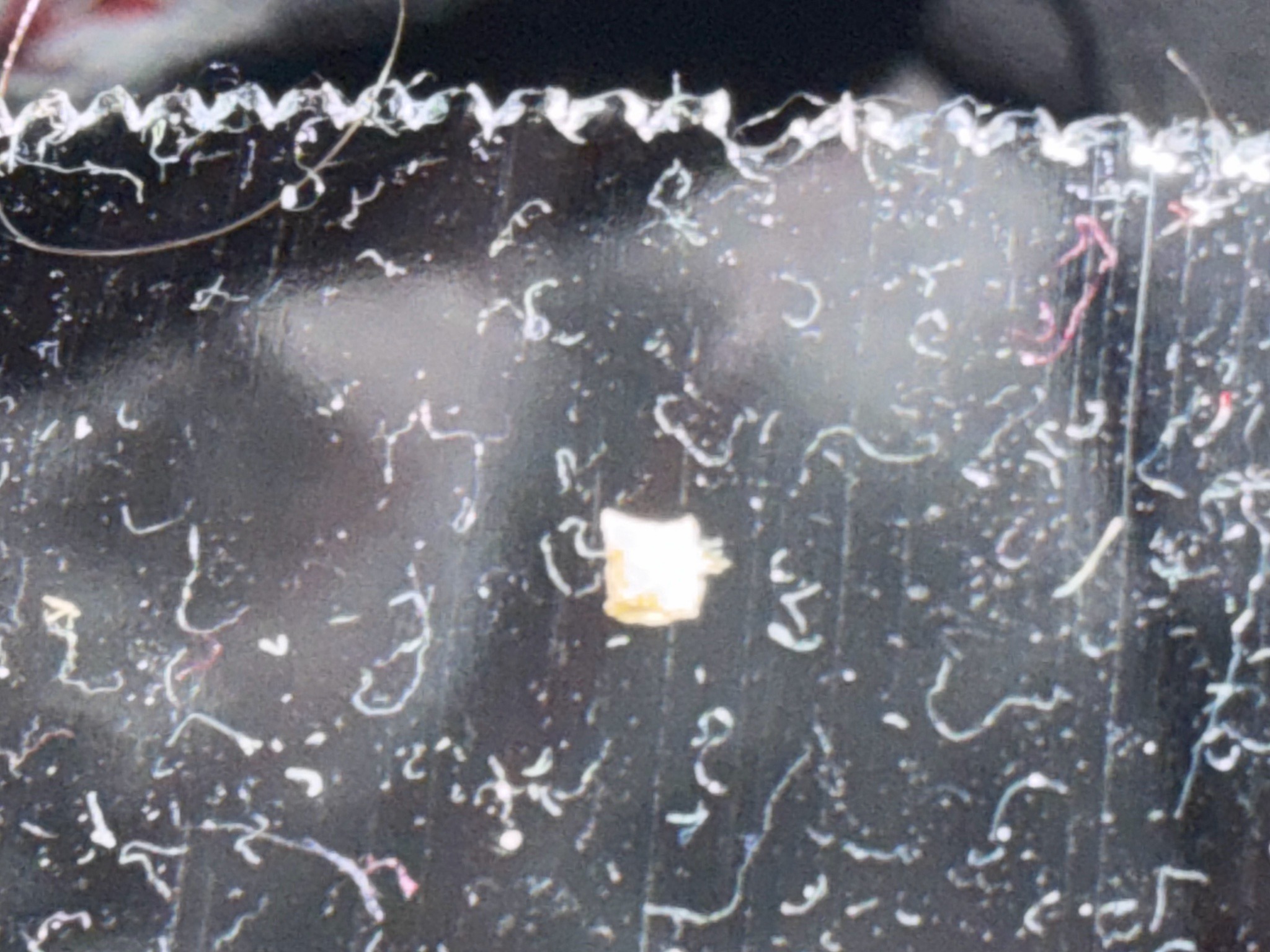
Community identification
Springtails (likely globular or elongate springtails)
Collembola; exact species cannot be determined from the image
- Order & Family
- Order Collembola; family uncertain
- Size
- Usually 0.5–6 mm long; the visible specimens appear minute, likely around 1–3 mm.
Natural Habitat
Moist soil, leaf litter, compost, fungi, and damp indoor surfaces such as window tracks or sink areas.
Diet & Feeding
They graze mainly on fungi, algae, decaying plant matter, bacteria, and organic residues rather than living tissue.
Behavior Patterns
They thrive in moisture and often occur in dense groups. Many species possess a forked furcula that propels them through the air when disturbed; they reproduce by eggs and immature stages resemble adults.
Risks & Benefits
Harmless to people, pets, and buildings, and they do not bite or infest food. They help decompose organic matter and recycle nutrients, though large indoor numbers indicate excess moisture.