
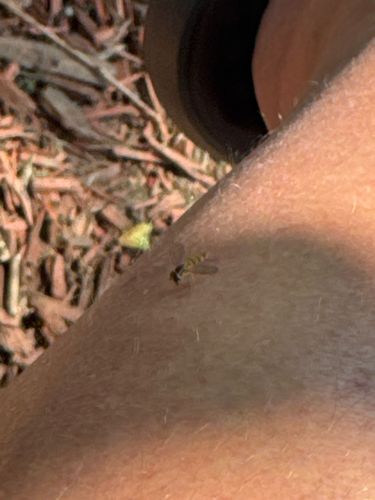
Hoverfly (also known as Flower Fly or Syrphid Fly)
Syrphidae (family level, as specific species is hard to determine from the image)
- Order & Family
- Order: Diptera, Family: Syrphidae
- Size
- Most hoverflies range from 4 mm to 25 mm in length.
Natural Habitat
Hoverflies are found in a wide variety of habitats where flowering plants are present, including meadows, gardens, forests, agricultural fields, and urban areas. The specific habitat often depends on the larval diet and requirements, such as access to aphid colonies, decaying wood, or stagnant water.
Diet & Feeding
Adult hoverflies primarily feed on nectar and pollen from flowers. The diet of larvae varies greatly by species: many are predators of soft-bodied insects like aphids, scale insects, and thrips; others are detritivores, feeding on decaying organic matter in soil, water, or decaying wood; a few are phytophagous (plant-eating), but these are not common.
Behavior Patterns
Adult hoverflies are common visitors to flowers, feeding on nectar and pollen. They are known for their ability to hover stationary in the air, similar to hummingbirds. Larvae of different species have varied behaviors; aphid-eating larvae are often seen crawling among aphid colonies on plants. Some hoverfly larvae are aquatic filter feeders, while others live in decaying wood. They are strong fliers and can travel significant distances.
Risks & Benefits
Hoverflies are largely beneficial insects. Risks: They are harmless to humans and do not sting or bite, despite their mimicry of wasps or bees. Benefits: They are excellent pollinators, contributing significantly to the pollination of many crops and wild plants. Their larvae, particularly those that prey on aphids, are important biological control agents, helping to reduce pest populations in agriculture and gardens, thus reducing the need for chemical pesticides.