
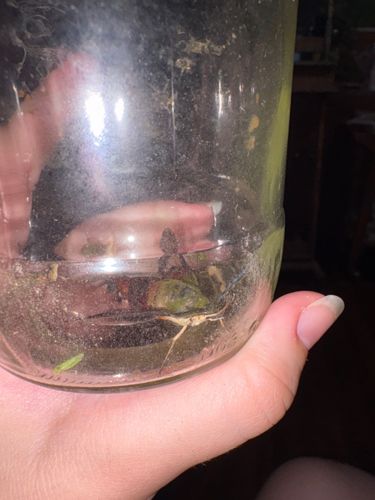
Water Scorpion
Nepa (e.g., Nepa cinerea) or Ranatra (e.g., Ranatra linearis), depending on the specific genus, as both are commonly called water scorpions. The pictured specimen appears more like Ranatra due to its elongated body.
- Order & Family
- Hemiptera, Nepidae
- Size
- Body length typically ranges from 1.5 cm to 4.5 cm (0.6 to 1.8 inches), excluding the long caudal breathing tube which can add another 1-3 cm depending on the species.
Natural Habitat
Still or slow-moving freshwater environments such as ponds, ditches, and the vegetated margins of lakes. They prefer areas with abundant aquatic vegetation where they can hide and ambush prey.
Diet & Feeding
Carnivorous. They prey on a variety of aquatic invertebrates and small vertebrates, including other insects, tadpoles, and small fish.
Behavior Patterns
Ambush predator, waiting motionless for prey to come within striking distance. They use their raptorial forelegs to capture and hold prey. They typically hang upside down from submerged vegetation or debris, with their breathing tube (caudal siphon) extended to the water surface to breathe atmospheric air. They are poor swimmers but can fly.
Risks & Benefits
Water scorpions are not considered harmful to humans, though they can deliver a painful bite (similar to a bee sting) if handled, using their piercing mouthparts. They are beneficial in aquatic ecosystems as predators that help control populations of other aquatic insects and larvae, including mosquito larvae, thus contributing to ecosystem balance.