
Community identification
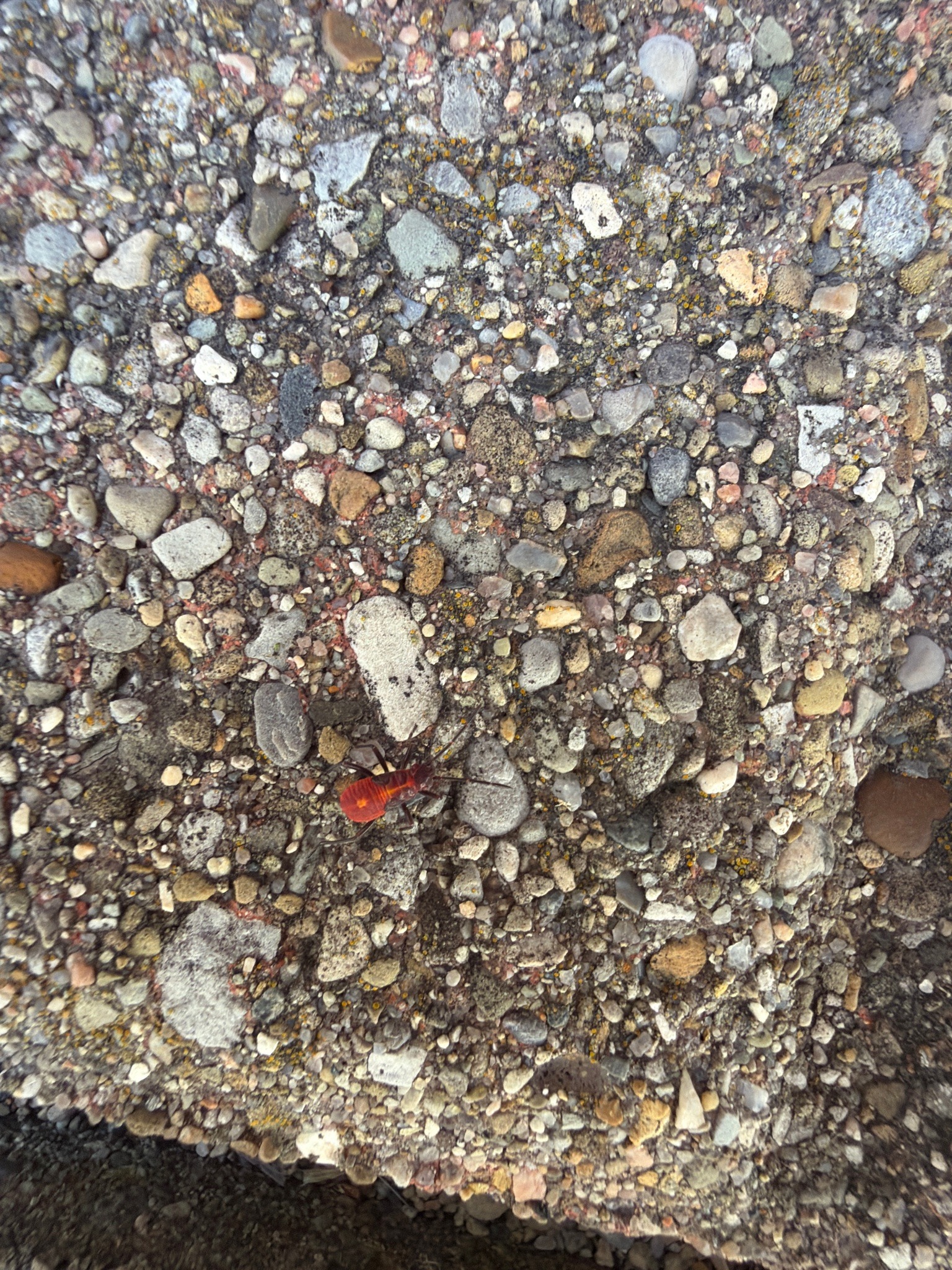
Western Conifer Seed Bug (Nymph)
Leptoglossus occidentalis
- Order & Family
- Order Hemiptera, Family Coreidae
- Size
- Adults are 16–20 mm long; nymphs (pictured) are smaller and brightly colored
Natural Habitat
Coniferous forests, woodlands, and residential areas near pine, fir, or spruce trees
Diet & Feeding
Feeds on the developing seeds and cones of various conifers by piercing them with a proboscis
Behavior Patterns
Nymphs emerge in summer; they are noticeable for their bright reddish-orange abdomen. They undergo five molts before becoming winged adults. In fall, they often seek shelter in homes for hibernation.
Risks & Benefits
Harmless to humans; they do not bite or sting. They can be a nuisance when entering homes in large numbers. Ecosystem-wise, high populations can reduce the seed yield of conifer trees.